Most people change their sheets when they remember, or when the bed starts to feel less than fresh. The trouble is that what builds up in bedding is mostly invisible, so “when it feels dirty” usually means well past due.
So, how often to wash sheets? The general advice from dermatologists is at least once a week, and not much longer than two weeks. That is a starting point, not a fixed rule. Sweat, pets in the bed, allergies, illness and a hot Arizona summer all push the schedule shorter.
This guide explains what actually collects in your sheets, when to wash more often, the water temperature that makes a difference, and how the rest of the bed (pillows, comforter, duvet cover, mattress) fits into the routine. We launder a lot of household bedding at our Mesa counter, so we will also be clear about which pieces are easier to hand over.
Contents
Key takeaways
- Cleveland Clinic advises washing sheets at least once a week, and says swapping them every one to two weeks is the general rule.
- Wash more often if you sweat a lot, have allergies or asthma, share the bed with pets, are recovering from an illness, or it is hot or humid.
- For dust mite allergies, the Asthma and Allergy Foundation of America recommends washing bedding weekly in water of at least 130°F.
- Comforters and pillows need washing far less often than sheets, around every six months or as needed, according to Cleveland Clinic.
- If you skip the top sheet, your duvet cover is touching your skin every night and belongs on the same schedule as your sheets.
How often to wash sheets: the short answer
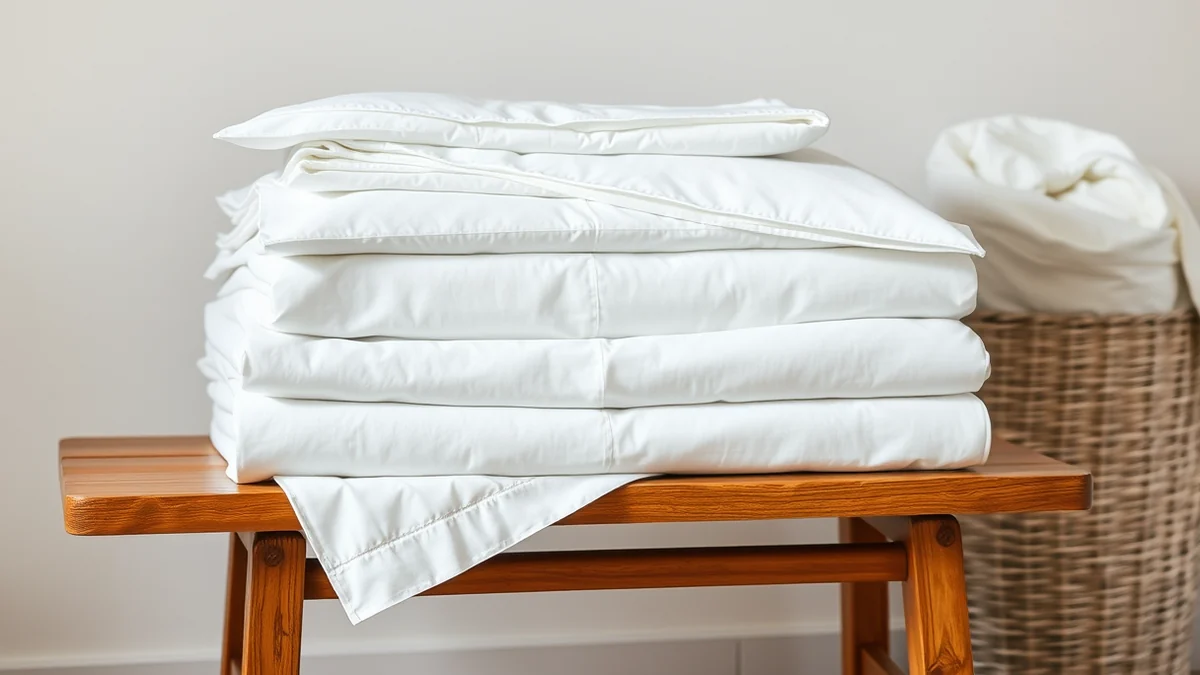
Once a week is the standard answer to how often to wash sheets. Cleveland Clinic’s dermatology guidance says medical experts advise washing sheets at least once a week, and it suggests swapping them for clean ones every one to two weeks. It also notes that even washing every other week provides real benefits over leaving them longer.
In practice that means:
- Weekly is the target for most adults.
- Every two weeks is the outer limit, for someone who sleeps alone, showers before bed and has no pets on the bed.
- More often than weekly when any of the factors in the next section apply.
Pillowcases go in with the sheets, since your face, hair and skin products are on them all night.
What builds up in your sheets
Clean-looking sheets are not necessarily clean. Every night they collect:
- Dead skin. Cleveland Clinic notes that the average person sheds about a gram and a half of skin cells a day, and those cells in sheets, pillows and mattresses act as a breeding ground for bacteria.
- Sweat and body oils. These soak into the fabric, feed odours and gradually turn white and pale sheets yellow.
- Dust mites. They feed on shed skin and thrive in warm, moist bedding.
- Everything else. Pet hair and dander, pollen, dust, makeup, lotion and food crumbs.
None of this is dangerous for most healthy people over a few days. It is the build-up over weeks that causes musty smells, grubby-looking fabric and, for people with allergies, more sneezing and congestion.
When to wash your sheets more often
Cleveland Clinic lists the situations where washing more often matters more. Wash sheets more often than weekly if:
- you have asthma or allergies
- you sweat a lot at night
- it is hot or humid
- your pets sleep in your bed
- you are recovering from an illness or infection
- you sleep naked
Several of those apply to many East Valley homes for months at a time, which changes how often to wash sheets here. In a Mesa summer, even with the air conditioning on, people sweat more at night, and more sweat in the fabric means sheets go stale faster. If you notice a smell or feel the sheets are damp in the morning, that is your cue to wash sooner.
One simple habit helps whatever your schedule. Cleveland Clinic suggests leaving the bed unmade for a little while in the morning so sweaty sheets can dry out, which reduces the moisture dust mites and bacteria need.
A bedding schedule for the whole bed
Sheets are only part of the bed. Here is how the rest fits in.
| Item | How often to wash | Notes |
|---|---|---|
| Sheets and pillowcases | At least weekly; every one to two weeks at most | More often with pets, allergies, heavy sweating or illness |
| Duvet cover (no top sheet) | Same as sheets | It is touching your skin every night |
| Duvet cover (with top sheet) | Every few weeks | The top sheet takes most of the sweat |
| Blankets | Every few months | Sooner if pets sleep on them |
| Comforters and pillows | About every six months, or as needed | Cleveland Clinic’s guidance; follow the care label |
| Mattress | Vacuum about every six months | Spot-clean stains with a mild detergent |
For the bulky items, our guides on washing pillows by fill type and washing a down comforter at home go through each step.
How to wash sheets properly
Knowing how often to wash sheets is half of it. Here is how to wash sheets so they actually come out clean:
1. Check the care label. Most cotton and polyester-blend sheets can take a hot wash. Silk, some bamboo-derived fabrics and linen with special finishes may need cooler water. 2. Use hot water where the label allows. Cleveland Clinic says hot water is best because the heat kills dust mites. For dust mite allergies, the Asthma and Allergy Foundation of America specifies at least 130°F. 3. Know what “hot” means. On a US care label, the federal definition of hot water starts at an initial temperature of 112°F. A “hot” cycle is not automatically hot enough for dust mites, so check your washer’s settings if allergies are the reason you are washing. 4. Do not overload. Sheets need room to move. A king set crammed in with towels tangles and comes out with dry patches of dirt. 5. Wash sheets on their own. Towels shed lint onto sheets, and zips and buttons from clothing can snag fine weaves. 6. Dry completely. Damp sheets folded into a closet smell musty within days. In the Arizona sun, sheets on a line dry very quickly, which is a genuine advantage of living here. Just bring them in before a monsoon dust storm rolls through.
Top sheet or no top sheet?
Plenty of people now skip the top sheet and sleep straight under a duvet in a cover, the way much of Europe does. It makes the bed faster to make, and many people find a top sheet just ends up tangled at the foot of the bed.
There is nothing wrong with that choice, but it changes the laundry. Without a top sheet, the duvet cover is doing the sheet’s job, so it needs washing as often as your fitted sheet and pillowcases. Wrestling a duvet out of its cover every week is the real trade-off. If that is not going to happen, a top sheet is the easier way to keep the bed clean.
When to bring bedding to a cleaner
Sheets and pillowcases are easy to wash at home. Some bedding is not:
- Comforters that do not fit your washer. A king comforter crammed into a home machine does not rinse properly and can take hours to dry through. Our specialty services include comforters and pillows.
- Down and feather bedding. These need thorough, even drying, or the fill clumps and can smell.
- Silk sheets and dry clean only bedding. Follow the label, or hand them over.
- Anyone who simply does not have the time. Weekly sheets for a full household add up to a lot of loads. Our wash and fold service handles bedding along with everyday laundry, and our guide to what a laundry service includes explains how it all works.
The bottom line
How often to wash sheets comes down to this: once a week as a rule, never much past two weeks, and more often if you sweat, share the bed with pets, have allergies or are unwell. Use the hottest water the label allows, dry everything fully, and wash comforters and pillows about twice a year.
If the bulky pieces or the weekly loads are more than you want to handle, we can help. Call us on (480) 969-9982, drop bedding in the 24-hour drop-off box outside our store at 1911 E Brown Rd, Mesa, or ask about East Valley pickup and delivery on Wednesdays and Fridays, scheduled by phone.
Bipin Kanabar — Owner, Bartoli Cleaners & Laundry, serving Mesa since 1957.
Frequently asked questions
Is once a month enough to wash sheets?
No, once a month is too long for most people. Cleveland Clinic advises washing sheets at least once a week and swapping them every one to two weeks at most. After a month, sheets hold weeks of sweat, body oil, dead skin and dust mites. If weekly feels hard, aim for every two weeks and wash pillowcases more often in between.
Why are people no longer using top sheets?
Many people skip top sheets because they sleep under a duvet in a washable cover instead, which makes the bed quicker to make and avoids a sheet tangling at the foot of the bed. The catch is laundry: without a top sheet, the duvet cover touches your skin every night, so it needs washing as often as your fitted sheet.
Should you wash sheets in hot or cold water?
Hot water is best for most sheets, because heat kills dust mites and cleans away body oils more thoroughly. Check the care label first, since silk and some delicate fabrics need cooler water. If you have a dust mite allergy, the Asthma and Allergy Foundation of America recommends washing bedding weekly at 130°F or hotter.
How often should you wash your comforter?
Wash a comforter about every six months, or sooner if it gets stained, smells, or a pet sleeps on it. Cleveland Clinic gives the same guidance for comforters and pillows. A duvet cover protects the comforter inside, so wash the cover with your sheets. Large or down comforters often clean and dry better in a commercial machine than at home.
Can you wash sheets and towels together?
It is better not to wash sheets and towels together. Towels shed lint that clings to sheets, and their weight and bulk stop sheets moving freely, so both come out less clean. Towels also usually need a longer, hotter dry. Wash sheets on their own, or with other light bedding such as pillowcases, for the cleanest result.