The laundry basket is full again, the work shirts need ironing, and there is a jacket on the chair that says “dry clean only”. If you are thinking about handing some of that to a laundry service, the first thing to know is that the phrase covers several different jobs.
A laundry service washes, dries and finishes clothes for you. Depending on the business, that can mean everyday clothes washed and folded by the bag, shirts laundered and pressed on hangers, garments dry cleaned, or all three, handed over at a counter or collected from your door. Knowing which one you need is what gets you the result you expect.
We have run a laundry and dry cleaning counter in Mesa since 1957, so this guide is written from our side of that counter. It covers what each kind of service includes, drop-off versus pickup and delivery, what to expect when you hand over a load, and how to choose a service you will stick with.
Contents
- What a laundry service actually includes
- Wash and fold, pressed shirts or dry cleaning?
- Drop-off or pickup and delivery
- What to expect when you hand over your clothes
- How to choose a laundry service
- What should go to dry cleaning instead
- How it works at Bartoli
- The bottom line
- Frequently asked questions
Key takeaways
- A laundry service can mean three different jobs: wash and fold for everyday clothes, laundered and pressed shirts on hangers, and dry cleaning for garments that should not go in water.
- Sort by care label, not by colour alone. Under the FTC Care Labeling Rule, a “dry clean only” label warns that the garment can’t be washed.
- Drop-off suits people who pass the store anyway; pickup and delivery suits people who plan their week, especially when the route runs on fixed days.
- Tell the counter about stains, fragile trims and anything you want handled separately before the clothes go in, not after they come back.
- The right service is the one whose schedule, communication and care fit your household, not simply the nearest one.
What a laundry service actually includes
At its simplest, a laundry service takes clothes and household linens that can be washed in water and returns them clean, dry and ready to put away. What “ready” means depends on the service you choose.
- Wash and fold. Everyday clothes, towels and sheets are washed, dried and folded. This is the service for the weekly basket: T-shirts, jeans, gym clothes, kids’ clothes, bedding.
- Laundered and pressed. Dress shirts, cotton trousers and similar pieces are washed, then pressed and returned on hangers. This is what most offices mean when they say “shirts from the cleaners”.
- Dry cleaning. Garments that should not be washed in water are cleaned in a machine that uses a solvent instead, then pressed. Suits, wool coats, silk blouses and structured dresses usually belong here.
A full-service cleaner handles all three under one roof, which matters more than it sounds. When you hand over a mixed bag, someone has to decide what goes where. At a wash-and-fold-only shop, a wool sweater that slipped into the bag gets washed with everything else.
Wash and fold, pressed shirts or dry cleaning?
The US Code of Federal Regulations glossary behind care labels draws the line clearly. Its definitions describe machine washing as removing soil with water, detergent or soap and agitation, and dry cleaning as a process using a common organic solvent in a machine. Different processes, different garments.
| Wash and fold | Laundered and pressed | Dry cleaning | |
|---|---|---|---|
| What it is | Washed, dried and folded | Washed, then pressed and hung | Cleaned in solvent, then pressed |
| Best for | Everyday clothes, towels, sheets, activewear | Cotton and cotton-blend dress shirts, some trousers | Suits, wool, silk, rayon, structured or lined pieces |
| Comes back | Folded in a bag | On hangers | On hangers |
| Watch out for | Anything labelled dry clean only | Delicate buttons and trims | Tell us about stains so they can be treated first |
| Bartoli service | Wash and fold | Laundry and pressing | Dry cleaning |
If you want the long version of how the bag service works, we cover it in our guide to how wash and fold works and who it suits. Pressed shirts sit under our laundry and pressing service, which is what most people picture when they ask for shirt laundry.
A quick way to decide: if you would happily put it in your own washer and dryer, it can go in the wash and fold bag. If you would iron it before wearing it, ask for it laundered and pressed. If the label says dry clean, or you are not sure the fabric will survive water, it goes to dry cleaning.
Drop-off or pickup and delivery
There are two ways to get clothes to a laundry service, and neither is better in every case.
Drop-off. You bring the clothes to the counter, explain anything unusual, and collect them when they are ready. A drop off laundry service suits people who drive past the store on the way to work or school. It is also the easiest way to point out a stain in person.
Pickup and delivery. A driver collects the bag from your home or office and brings it back. Dry cleaning pickup and delivery is especially useful for people who work long hours, have young children, or simply do not want to spend Saturday morning running errands.
The detail that matters most is how the delivery side runs. Some businesses send a driver whenever you ask. Others, including us, run routes on set days, so you know when a bag goes and comes back. A fixed day is easier to build a routine around. We explain the trade-offs in our post on how laundry pickup works in the East Valley, so we will not repeat it all here.
What to expect when you hand over your clothes
Whichever route you choose, a good laundry service follows roughly the same steps:
1. Intake. The clothes are counted or listed and tagged to your name so they come back to you. 2. Sorting. Items are separated by process (wash, press or dry clean), then by colour and fabric. 3. Stain check. Marks you have pointed out get treated before the main wash. Heat from a dryer or press can set some stains, which is why they are dealt with first. 4. Cleaning. Washing, drying or dry cleaning at settings suited to the fabric. 5. Finishing. Folding, pressing or hanging, depending on what you asked for. 6. Return. Collection at the counter or delivery on the next route day.
Your part is small but it makes a difference. Empty the pockets (pens and lip balm ruin whole loads), flag stains and say what caused them if you know, and set aside anything with beading, sequins or a delicate lining. Ask about timing when you drop off rather than assuming.
How to choose a laundry service
Most people pick the nearest one. Before you settle on a laundry service for the long term, check a few things:
- Does it handle all three processes? A cleaner that does wash and fold, pressed shirts and dry cleaning can route a mixed bag correctly. A wash-only shop can’t.
- Does the schedule fit yours? Store hours, whether there is an after-hours drop box, and which days delivery runs.
- Will someone talk to you? You want a counter or a phone number where a person answers questions about a specific garment.
- How are special requests handled? Hypoallergenic detergent, no fabric softener, items washed separately. Ask before you hand anything over.
- What happens with problems? Ask how they deal with a missing sock or a stain that did not come out. A straight answer at the start tells you a lot.
- Track record. Recent local reviews say more than any advert.
What should go to dry cleaning instead
A wash and fold bag is the wrong place for some things. The FTC’s guide to the Care Labeling Rule notes that “dry clean only” warns the garment can’t be washed, and that labels must carry a warning when a normal care step would harm the item. Keep these out of the laundry bag and hand them over separately:
- Suits, blazers and anything with shoulder pads or structured lining
- Wool coats and most wool trousers
- Silk, rayon and acetate unless the label clearly allows washing
- Beaded, sequinned or embellished pieces
- Leather and suede
Our dry cleaning service covers these, and the specialty side of the business handles bulky or unusual items such as comforters, drapes, rugs, pillows and wedding gowns. If you are not sure which pile something belongs in, leave it out of the bag and ask at the counter.
How it works at Bartoli
Here is how our laundry service runs in practice.
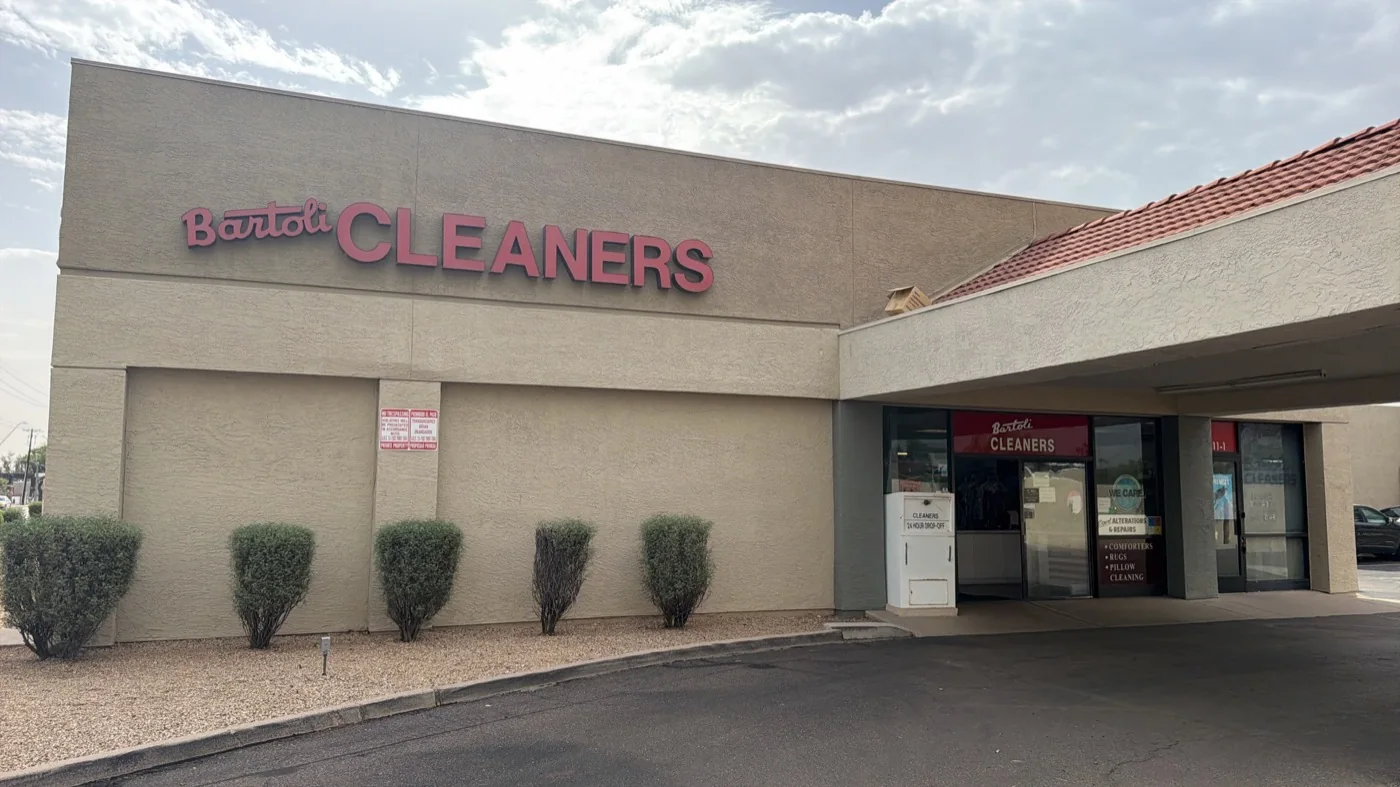
At the counter. We are at 1911 E Brown Rd, Unit 1, in Mesa. The counter is open Monday to Friday 8am to 6pm and Saturday 9am to 3pm, closed Sunday. Bring everything in one go, tell us what needs washing, what needs pressing and what needs dry cleaning, and point out any stains.
After hours. If the counter is closed, use the 24-hour drop-off box outside the store. Bag the clothes, put your name and phone number inside, and add a note about anything that needs special handling. We will call if we have a question.
Pickup and delivery. We collect and deliver across the East Valley on Wednesdays and Fridays. Call (480) 969-9982 to get on the route and confirm your address is covered. A person on the phone sets it up with you.
Wash and fold, laundry and pressing, dry cleaning, alterations and repairs, and specialty cleaning all come through the same counter, so a mixed bag gets sorted once, by people who handle this every day.
The bottom line
A laundry service is worth it when it matches what you actually own. Everyday clothes go to wash and fold, shirts you want crisp go to laundry and pressing, and anything labelled dry clean goes to dry cleaning. Then choose between dropping off and pickup based on how your week runs.
If you are in Mesa or the wider East Valley and want to try it, call us on (480) 969-9982, drop a bag in the 24-hour drop-off box outside the store, or ask to be added to our Wednesday and Friday pickup route. You can also ask our front desk about any offers currently running.
Bipin Kanabar — Owner, Bartoli Cleaners & Laundry, serving Mesa since 1957.
Frequently asked questions
Is it worth paying for laundry service?
For many households, yes, because it gives back hours every week and gets clothes handled by people who sort and treat them correctly. It makes most sense if you work long hours, have a large family, lack a good washer at home, or own shirts and suits that need pressing or dry cleaning. If you have time and only wash casual clothes, doing it yourself may suit you better.
What is the difference between a laundry service and dry cleaning?
A laundry service cleans clothes in water with detergent, while dry cleaning uses a solvent in a special machine instead of water. Laundry suits cotton, linen and most everyday synthetics. Dry cleaning suits wool, silk, structured suits and anything labelled dry clean only. Many cleaners offer both, so one visit can cover the whole pile if you sort by care label first.
How does a drop off laundry service work?
You bring your clothes to the counter, the staff tag them to your name, and you collect them clean and finished when they are ready. At the counter you explain what needs washing, pressing or dry cleaning and point out stains. At Bartoli you can also leave clothes in our 24-hour drop-off box outside the store when we are closed.
Do you need to sort your clothes before using a laundry service?
No, you do not need to sort by colour, but you should pull out anything that needs dry cleaning or special care. The cleaner separates whites, darks and fabrics. What you should do is empty pockets, flag stains, and keep suits, wool, silk and embellished pieces apart from the wash and fold bag, or tell the counter they are in there.
Does Bartoli offer dry cleaning pickup and delivery?
Yes, we pick up and deliver dry cleaning and laundry across the East Valley on Wednesdays and Fridays. Pickup is scheduled by phone, so call (480) 969-9982 to set it up and check your address is on the route. Hand over everything in one bag and label anything that needs special handling, and we will sort it into the right service.