A drip of coffee, a splash of salad dressing, a smear of sweat along the knot after a hot Mesa afternoon. Ties sit right in the firing line, and most of them are made of silk that reacts badly to the usual fixes.
Here is the short answer on how to clean a tie: identify the fabric, deal with fresh spots gently from the back, keep water to a minimum on silk, and never put a silk tie through a washing machine. Anything beyond a small fresh spot, or any tie you care about, is safer with a professional dry cleaner.
This guide covers how to tell what your tie is made of, why ties are harder to clean than they look, the right home technique for common stains, and what we check when a tie comes across our counter.
Contents
Key takeaways
- Neckties are excluded from the FTC’s Care Labeling Rule, so many ties have no care instructions at all and you have to work out the fabric yourself.
- A typical good tie is a silk shell over a wool-blend lining; water can shrink or pucker those layers differently, which is why silk ties are dry cleaned rather than washed.
- Spot-clean from the back of the fabric, blot rather than rub, and test any cleaner on the hidden narrow end first.
- For a fresh grease spot on silk, Turnbull & Asser suggests covering it with fine salt for a few minutes, then brushing it off gently.
- Polyester and microfibre ties tolerate a careful hand wash far better than silk or wool; no tie belongs in a washing machine.
First, find out what your tie is made of
Before you decide how to clean a tie, you need to know the fibre. That sounds obvious, but ties are a special case. The FTC’s guide to the Care Labeling Rule lists neckties among the items excluded from the rule, along with belts, suspenders and handkerchiefs. So unlike a shirt or a dress, a tie doesn’t have to carry care instructions, and many don’t.
Start with any label on the back of the wide blade or the keeper loop. “100% silk”, “polyester”, “microfibre”, “wool” or “cotton” tells you most of what you need.
No label? A few clues help:
- Look and feel. Silk has a deep, slightly shifting lustre and warms quickly in your hand. Polyester often has a flatter, glassier shine and feels slick and cool.
- A burn test on one loose thread. The Sewing & Craft Alliance’s fact sheet on identifying fibres by burn test explains that animal fibres like silk burn slowly, put themselves out and smell like burning hair, while polyester melts, smells sweet and chemical and leaves a hard black bead. It also warns the test can’t identify blends with certainty. Only ever use a single stray thread, work over a sink or metal tray in a well-ventilated space, and keep water nearby. Never cut the tie.
Why ties are harder to clean than they look
A tie is not one piece of fabric. Turnbull & Asser describes its own ties as a silk shell with a wool-blend lining, made from three sections that are slipped together by hand, with a thread loop that lets the tie relax back into shape after wearing. Most quality ties follow the same idea.
That construction is exactly why water and heat cause trouble. When a silk tie gets soaked, the shell and the lining can behave differently as they dry, and the tie can pucker, twist or lose the soft rolled edge along its sides. Silk also water-spots, so a wet cleaning attempt can leave a ring that is more noticeable than the original stain.
How to clean a tie at home: spot cleaning step by step
For a small, fresh mark, this is how to clean a tie at home with the least risk:
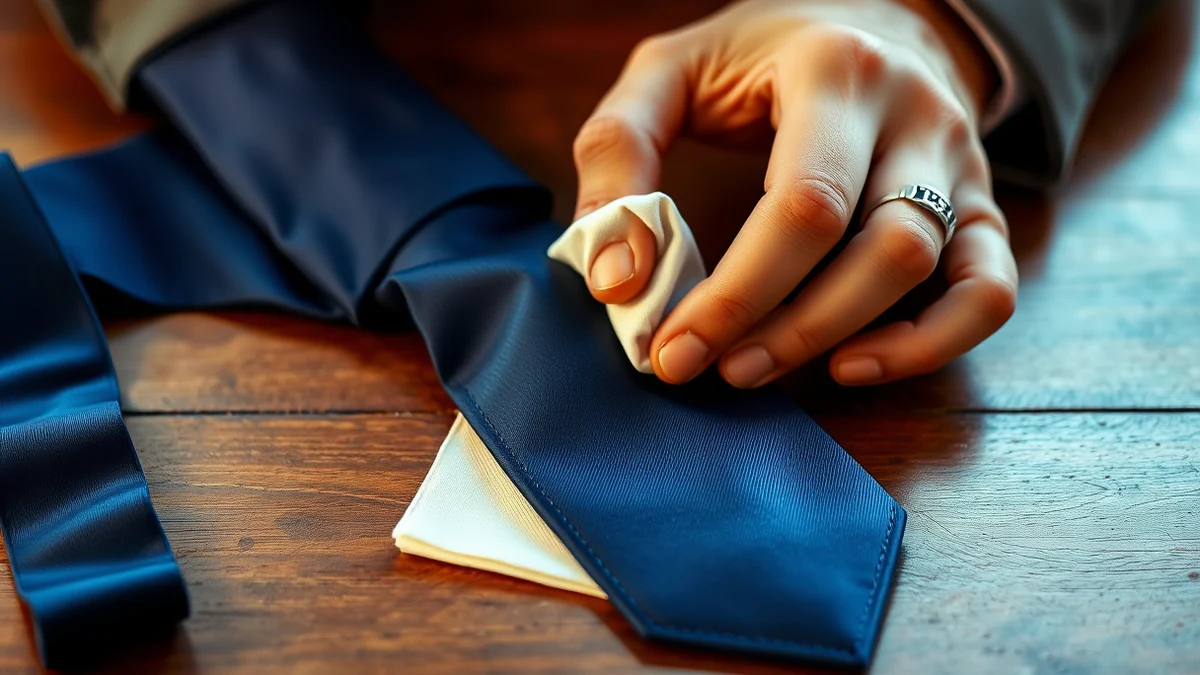
1. Act quickly. Fresh stains sit on top of the fibres; older ones soak in and set. 2. Lift, don’t rub. Scrape off anything solid with the edge of a spoon or a dull knife, working toward the centre of the spot. 3. Blot from the back. Place a clean white cloth or paper towel under the stained area and blot from the back of the fabric, so you push the stain out rather than deeper in. 4. Match the method to the stain (see the table below). Grease needs an absorbent powder; water-based stains need a barely damp cloth, not a soaking. 5. Test anything wet or chemical first on the inside of the narrow end, where a mark won’t show. 6. Dry flat, away from heat. Lay the tie on a towel and let it air-dry. Never use a hair dryer or iron to speed it up.
If you are learning how to clean a silk tie, add one rule: less is more. A light touch with a silk-safe spot cleaner, followed by blotting, is far better than repeated passes. Turnbull & Asser’s silk tie care guide recommends keeping a proprietary silk cleaner on hand and following its instructions, and says a stain may still need a professional cleaner to remove it fully.
Stain by stain
| Stain | First step at home | Avoid | Bring it in if |
|---|---|---|---|
| Grease, oil, salad dressing | Cover with fine salt or talc for a few minutes, then brush off gently | Water, dish soap scrubbing | A dark mark remains once the powder is brushed away |
| Coffee or tea | Blot from the back with a barely damp white cloth | Rubbing, hot water | It leaves a ring or tan shadow |
| Red wine | Blot at once with a dry cloth | Rubbing, hot water, soaking | Any colour stays after blotting |
| Sweat and collar grime | Nothing much at home on silk | Washing, deodorant sprays | The knot area looks darker or feels stiff |
| Ink | Leave it | Alcohol or hairspray on silk (can move dye) | Always |
| Makeup or foundation | Lift excess, blot from the back | Wipes, which spread oils | A tint remains |
Grease is the most common tie stain we see. For more detail on oily marks in general, our guide to removing oil stains without setting them walks through the same principle for other fabrics. For the order of operations on any stain, see our stain removal guide.
Can you wash a tie?
It depends on the fabric, but for silk and wool the answer is no. Turnbull & Asser is direct about it: silk ties should never be washed in, or exposed to, water, and should be dry cleaned.
For other fabrics:
- Polyester and microfibre ties can usually take a gentle hand wash in cool water with a little mild detergent. Swish, don’t wring, rinse, then roll in a towel and dry flat.
- Cotton and linen ties may wash, but many are lined with a different fabric that can shrink. Hand wash only if the label allows.
- Knit ties (silk or wool) should not be soaked; they stretch out of shape.
No tie belongs in a washing machine. Even a mesh bag on a delicate cycle can twist the lining, crush the edges and pull the slip stitch.
If you are curious about washing silk clothing more generally, our guide on which silks can go in water explains why a washable silk blouse and a silk tie are not the same thing.
Wrinkles, storage and everyday care
Much of how to clean a tie is really about keeping it from needing it:
- Untie the knot properly. Turnbull & Asser advises never pulling the narrow end through the knot, which strains the lining and stitching.
- Rest it between wearings. Silk recovers its shape given a day or two off.
- Roll it, don’t crush it. Store ties loosely rolled or laid flat in a drawer. Hanging on a crowded rail can leave creases.
- Steam, don’t iron. If a tie is creased, hang it in a steamy bathroom or hold a steamer well away from the fabric. If you must iron, use low heat with a pressing cloth, and never press the edges flat. Our guide to getting wrinkles out without an iron covers other gentle options.
- Keep it out of the heat. A stained tie left in a car through an Arizona summer afternoon gives heat a chance to help set the stain.
When to stop and bring it in
Stop and bring the tie to a professional if the stain has already dried, if water has left a ring, if the mark is ink or dye, if the knot area has darkened with sweat, or if it is a tie you don’t want to replace.
Our dry cleaning service handles ties alongside suits and shirts. When a tie comes across our counter in Mesa, we check the fibre and lining, ask what the stain is and how old it is, and ask whether anything was already tried on it. That last question matters, because a stain that has been scrubbed, salted or dabbed with soda behaves differently from a fresh one.
We will also be honest with you. Old oil stains and water rings on silk sometimes fade rather than disappear, and we would rather tell you that up front than promise something the silk can’t deliver.
The bottom line
Knowing how to clean a tie comes down to knowing the fabric, treating fresh spots gently from the back, and keeping water and heat away from silk. For anything bigger than a small, fresh spot, a professional dry cleaner is the safer choice.
Bring your ties to 1911 E Brown Rd, Unit 1, Mesa, Monday to Friday 8 to 6 or Saturday 9 to 3, or use the 24-hour drop-off box outside the store. Call (480) 969-9982 to schedule East Valley pickup and delivery on a Wednesday or Friday.
Bipin Kanabar — Owner, Bartoli Cleaners & Laundry, serving Mesa since 1957.
Frequently asked questions
Why are ties dry clean only?
Ties are usually dry clean only because most are silk with a separate wool or wool-blend lining. Water can make those layers shrink or pucker differently, leave water spots on silk and flatten the rolled edges. Neckties are also excluded from the FTC’s Care Labeling Rule, so many carry no care instructions and dry cleaning is the safe default.
Are ties supposed to be washed?
No, most ties are not supposed to be washed. Silk and wool ties should be spot-cleaned and dry cleaned, because water can distort the lining and leave marks on the silk. Some polyester and microfibre ties can take a gentle hand wash in cool water. Check any label, and if there isn’t one, treat the tie as dry clean only.
How can I tell if a tie is silk?
Check the label on the back of the blade or keeper loop first. Without one, silk has a deep, shifting lustre and warms in your hand, while polyester looks glassier and feels slick. A burn test on one stray thread also helps: silk smells like burning hair and puts itself out, while polyester melts into a hard bead. Never cut the tie.
Can you wash a tie in a washing machine?
No, you shouldn’t put a tie in a washing machine, even in a mesh bag on a delicate cycle. The agitation can twist the lining, crush the edges, pull the hand stitching and leave silk water-marked and puckered. Polyester ties can be hand washed gently in cool water; silk and wool ties should be spot-cleaned or dry cleaned instead.
How do you get a grease stain out of a silk tie?
Act quickly and cover the grease with fine salt or talc, leave it for a few minutes to absorb the oil, then brush it away gently. Don’t add water or rub. Turnbull & Asser recommends this salt method for emergencies. If a dark mark is still there afterwards, take the tie to a dry cleaner rather than trying again at home.