October is when East Valley households pull the down comforter out of the closet, and it usually comes out smelling a little stale and looking a little flat. The good news: most down comforters can be washed. The catch is that down punishes shortcuts, and the drying matters more than the washing.
This guide covers how to wash a down comforter specifically: why down needs different handling from other fills, the washer and detergent to use, how to dry it all the way through, and how to fix clumps. It also answers the questions we hear at the counter: why down turns yellow, and when an old comforter has earned retirement.
If your comforter is synthetic, cotton or wool-filled, our general guide to washing any comforter at home is the better starting point. This one is all about down and feather.
Contents
- Check the label and the shell first
- Why down needs different handling
- How to wash a down comforter, step by step
- Drying it all the way through
- How to fix clumps and flat spots
- Why down comforters turn yellow
- When to replace a down comforter
- When to bring it to a professional
- The bottom line
- Frequently asked questions
Key takeaways
- A down comforter can usually be machine washed, but only in a large front-loader or a washer without an agitator, where it can move freely.
- Use a small amount of down-specific or mild detergent, and run an extra rinse so no soap is left in the clusters.
- Drying on low heat with dryer balls takes several hours, and the comforter must be dry all the way to the center before it goes back on the bed.
- A damp, animal-like smell after washing means the down is still wet inside, not that the wash failed.
- Yellowing comes mostly from body oils, sweat and moisture working into the shell and fill over time; a duvet cover slows it down.
- Replace a down comforter when it stays flat after a proper wash and dry, leaks fill, or keeps a musty smell.
Check the label and the shell first
Before you think about detergent, read the care label. Most down comforters carry a washing instruction, some allow dry cleaning, and a few say professional cleaning only. Follow what it says; if the label is missing, treat the comforter as a candidate for professional cleaning.
Then look over the shell:
- Seams and baffles. Run your hands along the stitching. A loose seam will open further in a machine and let clusters escape into your washer.
- Small tears or pinholes. Down works its way out of any gap once it is wet and moving. Stitch small tears closed before washing.
- Stains. Spot-treat marks on the shell with a little mild detergent and cool water, working the fabric gently so you don’t soak the fill underneath.
Also think about size. A king-size down comforter is light when dry and very heavy once soaked. If it is a tight squeeze in your drum while dry, it will not rinse properly.
Why down needs different handling
Down is the soft under-plumage of ducks and geese: fluffy clusters rather than flat feathers. Those clusters trap air, and the trapped air is what keeps you warm. Anything that strips the clusters’ natural oils, or leaves them wet and matted, reduces the loft.
That is why learning how to wash a down comforter is really about three things: gentle agitation, very little soap, and complete drying.
| Fill | Can it be machine washed? | Main risk | What to do differently |
|---|---|---|---|
| Down | Usually, per label | Clumping, flat spots, musty smell if not fully dry | Down-specific or mild detergent, extra rinse, long low-heat dry with balls |
| Feather or feather-and-down blend | Usually, per label | Quills poking through the shell, slow drying | Same as down; check the shell for weak spots |
| Down alternative (polyester) | Usually | Melting or matting under high heat | Low heat, regular mild detergent, shorter dry |
| Silk or wool fill | Often not | Shrinking, felting, fibre damage | Follow the label; often professional cleaning |
How to wash a down comforter, step by step
Here is how to wash a down comforter at home once the label says it is safe.
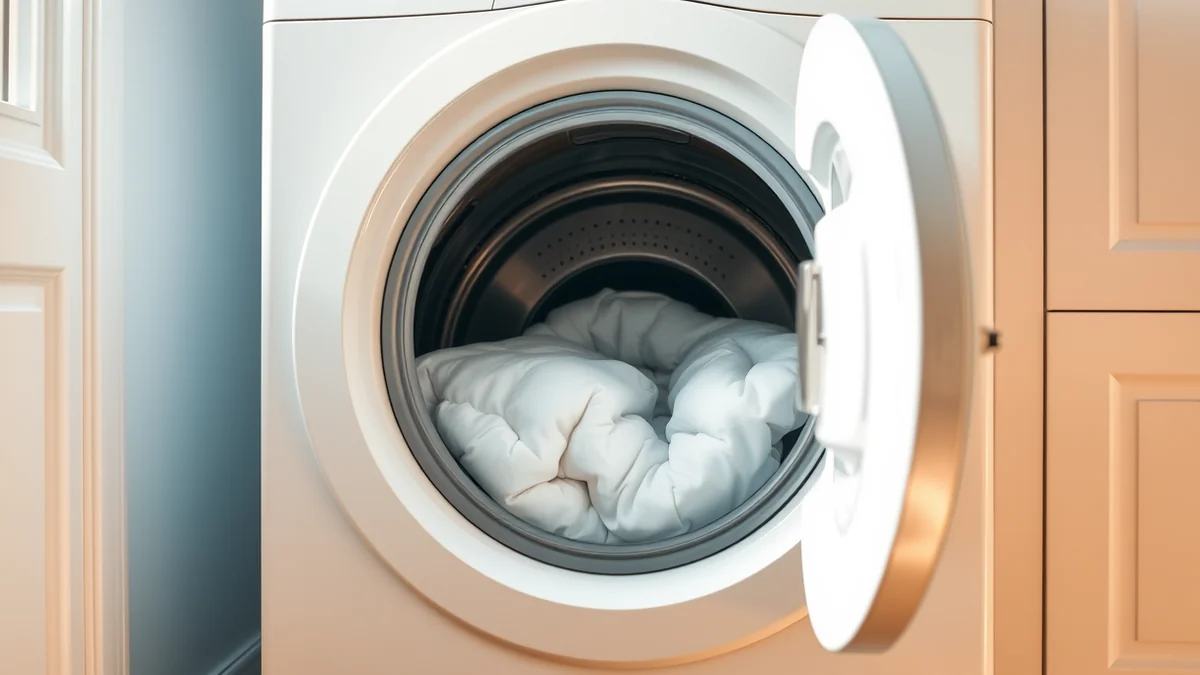
1. Use the right machine. Down comforter maker Downlite recommends a large-capacity washer with no agitator. Downlite notes that an agitator may damage the down clusters. If your home machine is too small, a large front-loader at a laundromat is the safer choice. 2. Pick the detergent. Use a down wash, or a small amount of mild detergent. Skip bleach and fabric softener; softener coats the clusters and weighs them down. 3. Choose a gentle cycle. Use the delicate or bulky cycle with the water temperature your label allows. 4. Add an extra rinse. Leftover soap makes clusters stick together. Downlite suggests running a second full cycle of clean water to make sure the rinse is thorough. 5. Spin well. A good spin pulls out water that would otherwise add hours to drying. Lift the comforter out with both arms under it; wet down is heavy, and hanging it by one corner strains the seams.
Wash it on its own. That is the one rule of how to wash a down comforter people skip most: towels or jeans in the same load rub the shell and unbalance the drum.
Drying it all the way through
Drying is where most home attempts go wrong. The outside of a down comforter feels dry long before the clusters in the middle are.
Use the largest dryer you can on low heat. Samsung’s guide to drying bedding recommends a low-heat cycle in a large-capacity dryer, dryer balls to fluff the down, and taking the comforter out halfway through to reposition it. It also suggests airing it on a rack for a day or two afterwards so it is completely dry.
Expect several hours and more than one cycle. Downlite advises taking the comforter out every 30 minutes or so to fluff it by hand. Wool dryer balls or clean tennis balls knock the clusters apart as they dry.
How do you know it is done? Squeeze the thickest parts, especially the corners and the center. There should be no cool, damp patches and no small hard lumps. Then smell it. Wet down has a strong, animal-like smell; once the fill is fully dry, that smell should fade. If it lingers, keep drying.
Our dry Arizona air helps with the final airing over a rack indoors. During monsoon season, humidity slows everything down, so give it longer. Avoid laying a down comforter out in direct summer sun for hours; the heat and light are hard on the shell fabric.
How to fix clumps and flat spots
Clumps nearly always mean one of two things: the down is still damp in places, or there is detergent residue holding clusters together.
- Still damp: put it back in the dryer on low with the balls and keep going. Pull apart any lumps by hand between cycles.
- Soap residue: run a rinse-only cycle with plain water, spin, and dry again.
- Fill has shifted to one end: hold the comforter by one edge, shake it hard, then shake it from the opposite edge. Baffle-box construction keeps down in place better than simple sewn-through channels.
The same drying principles apply to other down pieces. If you also have a down jacket to wash, our puffer jacket guide covers re-lofting in more detail.
Why down comforters turn yellow
Yellowing is a common complaint about down bedding. It usually comes from what the shell and fill absorb over years of use:
- Body oils and sweat soak into the shell every night and slowly discolour it, especially at the top edge near your face and shoulders.
- Moisture from humid weather, or a comforter stored before it was fully dry, can leave yellow or brown marks.
- Leftover detergent that was never fully rinsed out can discolour fabric as it ages.
- Age. Natural materials slowly discolour over time, even when well cared for.
A washable duvet cover is the simplest way to slow it down; Downlite calls one a must-have. Wash the cover with your sheets, and the comforter itself needs cleaning far less often.
Skip chlorine bleach; it is harsh on down and the shell. Yellowing that survives a careful wash is probably set in.
When to replace a down comforter
A good down comforter lasts for years, but not forever. It is time to replace it when:
- It stays thin and flat after a thorough wash and a full, patient dry.
- Down or feathers are leaking through the fabric, or quills are poking out.
- The shell is torn in several places or has worn thin.
- A musty or sour smell comes back even when it is fully dry.
- Allergy symptoms seem worse under it, even after cleaning.
Downlite suggests replacing its comforters roughly every five years. In practice, condition is the better guide than the calendar.
When to bring it to a professional
Sometimes bigger machines and a controlled dry are simply the safer choice:
- Your washer or dryer is too small for the comforter to move freely.
- The label says dry clean or professional clean only.
- It has heavy stains, a spill that soaked into the fill, or a musty smell after storage.
- It is an heirloom, a very high-fill piece, or silk-covered.
Comforters are one of our specialty cleaning services, and they’re on the sign above our door. We check the label, look over the seams and shell, and tell you honestly if there’s anything we’d be cautious about before we start. The same goes for down and feather pillows; our pillow washing guide covers those by fill type.
The bottom line
How to wash a down comforter comes down to a large, gentle machine, very little soap, an extra rinse, and a long low-heat dry until the middle is completely dry. Get the drying right and the loft comes back. Hurry it and you get clumps and a musty smell.
If you’d rather hand it over, call us on (480) 969-9982, drop it in the 24-hour drop-off box outside our store at 1911 E Brown Rd, Mesa, or ask about East Valley pickup and delivery on Wednesdays and Fridays, scheduled by phone. Our contact page has our hours and directions.
Bipin Kanabar — Owner, Bartoli Cleaners & Laundry, serving Mesa since 1957.
Frequently asked questions
Can I wash a down comforter in the washing machine?
Yes, most down comforters can go in a washing machine if the care label allows it and the machine is big enough. Use a large front-loader or a washer without an agitator, a gentle cycle, a small amount of down wash or mild detergent, and an extra rinse. If you have to force the comforter into the drum, use a larger machine instead.
Can you put a feather down comforter in the dryer?
Yes, and a dryer is the most reliable way to get a feather or down comforter fully dry. Use a large dryer on low heat with wool dryer balls or clean tennis balls, and take it out every half hour or so to fluff it. Expect several hours. Check the corners and center for damp patches before you call it done.
Why do down comforters turn yellow?
Down comforters turn yellow mainly from body oils and sweat that soak into the shell and fill over time. Moisture, storing the comforter before it is fully dry, and detergent left in after a poor rinse add to it, and natural materials also discolour with age. A washable duvet cover slows yellowing more than anything else.
Should I throw away old down comforter?
Not automatically; an old down comforter is worth keeping if it still lofts after a proper wash and dry. Replace it if it stays flat, leaks down or quills, has a torn or worn-thin shell, or keeps a musty smell once dry. If you are unsure, have it cleaned first and judge it afterwards.
Can you dry clean a down comforter?
You can dry clean a down comforter only if the care label allows it. Many down comforter labels call for washing, some permit dry cleaning, and a few say professional cleaning only. The label is the rule to follow. If it is missing or unreadable, bring the comforter in and we will look at the fill and shell with you before deciding.
How often should you wash a down comforter?
Most down comforters only need washing once or twice a year if you use a duvet cover. Downlite recommends at least once a year and preferably twice. Wash the cover regularly with your sheets, air the comforter out between washes, and clean it sooner after a spill, illness or a musty spell in storage.