The wedding is over, the dress is in a heap on a chair, and the hem is grey with dance-floor dust. Now you have to decide who gets to clean it. Wedding dress cleaning is not like dropping off a work shirt: the gown is usually a mix of fabrics, trims and glued details, and some of the stains on it are not visible yet.
This guide to professional wedding dress cleaning is written from behind our counter in Mesa: what a good cleaner checks before accepting a gown, which marks to point out, when dry cleaning is the right method, and how to judge any cleaner, including us.
Contents
- Why wedding dress cleaning is different from regular dry cleaning
- The stains you can’t see yet
- What we check when a gown comes across the counter
- Can you dry clean a wedding dress?
- How to choose who cleans your gown
- After cleaning: storing it in an Arizona house
- The bottom line
- Frequently asked questions
Key takeaways
- A wedding gown is a combination of fabrics, linings, trims and adhesives, so the right cleaning method is decided by its weakest part, not its main fabric.
- Clear spills such as champagne, white wine and sweat are often invisible on the day; tell your cleaner exactly where they happened.
- Under the FTC Care Labeling Rule, a “Professionally dryclean” label must say what to change, such as “No steam”, so read the whole label, not just the first word.
- A good cleaner inspects the dress with you, notes existing damage and loose beads in writing, and tells you honestly which marks may not come out.
- Plastic garment bags and long-term hanging are poor storage; a cleaned gown belongs in a breathable, pH-neutral box somewhere cool and dark inside the house.
Why wedding dress cleaning is different from regular dry cleaning
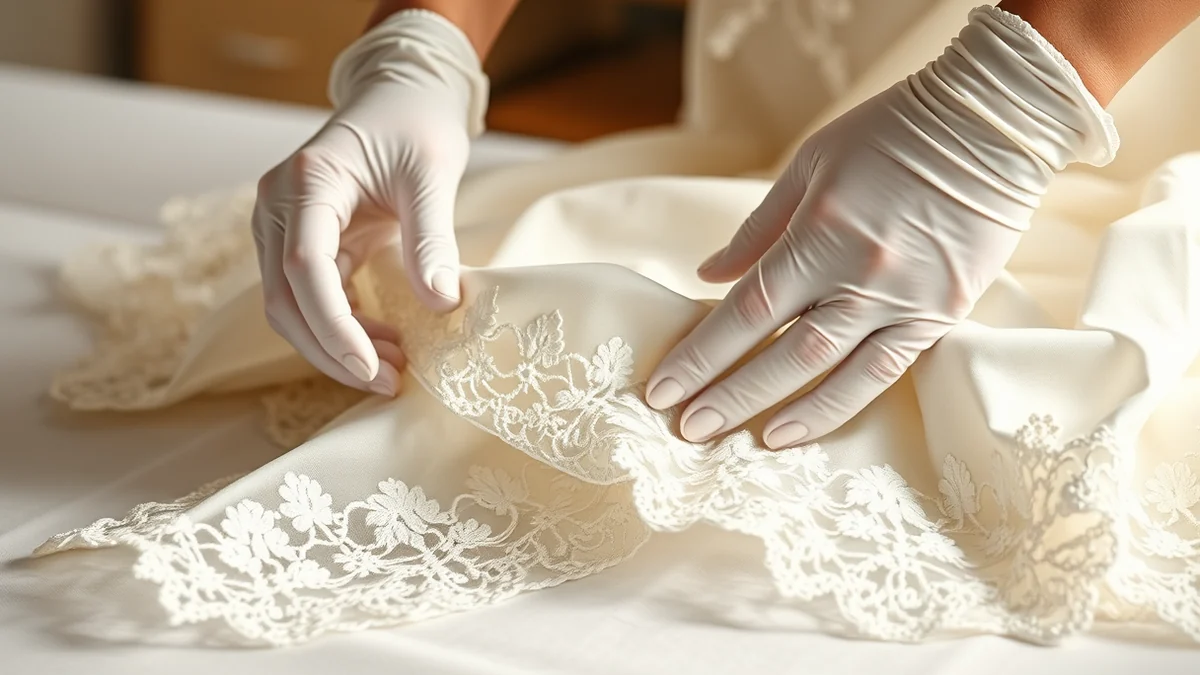
Most garments are one fabric with a lining. A wedding gown can be silk satin over a polyester lining, with a tulle underskirt, lace appliqués stitched on by hand, beads or sequins attached with glue, a boned bodice and a train that has been dragged across grass, concrete and a dance floor.
Each of those parts reacts differently to solvent, water, heat and agitation. Glued embellishments can soften, some sequins dull or curl, lace snags and tulle crushes. That is why proper wedding gown cleaning starts with an inspection, not a machine.
The other difference is timing. A suit can wait a week. With wedding dress cleaning, every week the gown sits with sugar, sweat and body oil in it gives those marks more time to set.
The stains you can’t see yet
The marks that worry us most are not the obvious ones. A grass stain on the train is easy to point to; a splash of champagne dries clear and nobody remembers it.
The Victoria and Albert Museum’s guide to caring for vintage wedding dresses and veils lists the stains its conservators see on old gowns: grass, champagne or white wine, food and sweat. Those are the same marks brides bring us after a reception, and the clear ones are the ones to mention, because they can show up as brown or yellow patches later.
When you bring a dress in, walk us through the day. Where did you hug people wearing makeup? Did anyone spill a drink? Was the ceremony outdoors? Here is what we look for and why:
| Mark | Where it usually is | Why it matters | What to tell us |
|---|---|---|---|
| Hem soil and dust | Hem, train, underside of the skirt | Desert venues and patios in the East Valley leave fine, gritty dust in the hem layers | Whether the ceremony or photos were outdoors |
| Sweat and deodorant | Underarms, bodice, back of the waist | Can yellow over time if left in the fabric | How hot the day was and how long you wore it |
| Makeup and self-tanner | Neckline, straps, sleeves | Oily; spreads if rubbed | Any spot you already tried to wipe |
| Clear drinks | Front of skirt, sleeves | Dries invisible, can darken later | Roughly where it landed |
| Food, cake and frosting | Front of skirt, bodice | Sugar and fat together | Anything you scraped or blotted at the time |
| Grass and red dirt | Hem, train, knees | Plant and mineral stains need specific treatment | Where you sat or knelt for photos |
If you already dabbed at a stain with water or a wipe, say so; it changes how the mark behaves.
What we check when a gown comes across the counter
Wedding dress cleaning at Bartoli starts with the two of us looking at the dress together, under good light, before anything is written up. Our specialty services include wedding gowns alongside comforters, rugs and leather, and they all start the same way: we look before we promise anything.
Here is what a careful intake covers:
1. The care label and fibre content. We read the full label, including any warnings. If the label has been cut out, tell us what you know about the fabric. 2. Embellishments. We check beads, sequins, pearls and appliqués for loose threads or glue, and point out anything already hanging by a thread. 3. Existing damage. Torn bustle loops, a split seam from the dance floor, a snag in the lace, a broken zipper pull. We note it so there is no confusion later. 4. Alterations. If the dress was taken in or hemmed, we look at those seams too. If something needs repair before cleaning, our post on wedding dress alterations explains what can be changed on a gown. 5. The stains you told us about, plus any we find, marked on the ticket.
What a good result from wedding dress cleaning looks like: the gown comes back fresh, the hem is noticeably lighter, the fabric keeps its drape, trims are intact, and you have been told plainly about any mark that faded but did not fully go. Some set stains will not come out completely, and an honest cleaner says so up front.
Can you dry clean a wedding dress?
Often yes, but not always. The answer depends on the fabric and every trim on it, and the care label is where to start.
The FTC’s guide to the Care Labeling Rule explains what the wording on a label means. A plain “Dryclean” instruction means the garment can go through a normal dry cleaning process with any common solvent. “Professionally dryclean” is not meant to stand alone: the label should also say what to change, such as “No steam” or a shorter cycle. “Dryclean only” means the maker has evidence the garment should not be washed.
The same FTC page notes that a cleaner does not have to follow the label, but that using a method the label does not list is risky, and that a cleaner may ask you to sign a form confirming you have discussed those risks. When a dress label and its trims point in different directions, that conversation matters. We would rather talk it through with you than guess.
A few general rules we explain at the counter:
- Polyester and most satin-finish synthetics usually handle professional cleaning well.
- Silk can water-spot and lose its sheen, so spot treatment is careful and slow.
- Glued beading and sequins are the weak point on many modern gowns; some adhesives soften in solvent or heat.
- Vintage gowns are a different case. Old fibres can be fragile, and the V&A notes that a textile conservator may be worth consulting for historic dresses.
If you have an older family gown in a box, our guide on how to clean a wedding dress at home covers the careful checks for older dresses, including when not to attempt it yourself.
How to choose who cleans your gown
People ask us where the best place is to get a wedding dress cleaned. The honest answer is a cleaner who does this work regularly, will inspect the dress with you and will answer straight questions. Location and a nice logo matter less.
Questions worth asking any cleaner, including us:
- Do you look at the dress with me before you take it? You want a yes.
- How will you handle the beading or lace on this dress? Listen for a specific answer, not “don’t worry about it”.
- Will you write down existing damage and the stains I point out?
- What happens if a stain doesn’t come out? A good cleaner explains the likely outcome before starting, not after.
- Can I see it and check it before I take it home?
Compared with mail-in wedding dress cleaning, a local shop can inspect the gown in front of you and answer follow-up questions face to face. For anything about the bill, call and ask directly; nobody can tell you properly without seeing the dress.
After cleaning: storing it in an Arizona house
Clean first, then store. Stains left in a gown before it goes into a box are the ones that turn into yellow and brown patches later.
The V&A is blunt about plastic: plastic dress covers are fine for the weeks before a wedding, but over time they let in light that can fade the fabric, and they don’t allow for changes in humidity, which risks condensation and mould. It also warns against leaving a dress on a hanger for long periods because of the stress on seams. Its recommendation is a box made of pH-neutral board with a fitted lid, and tissue that is acid-free and white.
In the East Valley, where you keep the box matters as much as the box. Garages and attics here get extremely hot in summer, and monsoon season brings humidity and dust. An interior closet in an air-conditioned room is far kinder to fabric.
If you want the gown boxed for the long term, our post on wedding dress preservation explains what that involves and why timing matters. Call and ask whether we can prepare your gown for preservation when you drop it off.
The bottom line
Good wedding dress cleaning comes down to three things: get the gown in soon, tell the cleaner everything that happened to it, and choose someone who inspects it with you and is honest about what may not come out.
If you are in Mesa or anywhere in the East Valley, bring your gown to 1911 E Brown Rd, Unit 1. We are open Monday to Friday 8 to 6 and Saturday 9 to 3. Call (480) 969-9982 to talk it through first, or to schedule East Valley pickup and delivery on a Wednesday or Friday. Please bring a gown in person during opening hours rather than using the 24-hour drop-off box, so we can inspect it together. Our contact page has directions.
Bipin Kanabar — Owner, Bartoli Cleaners & Laundry, serving Mesa since 1957.
Frequently asked questions
Is it worth it to dry clean a wedding dress?
Yes, if you plan to keep, sell or pass on the dress. Sweat, makeup and clear spills like champagne can stay invisible at first and discolour the fabric later, and they are much harder to deal with once they have set. Professional cleaning soon after the wedding removes most of that while the stains are fresh.
Where is the best place to get a wedding dress cleaned?
The best place is a cleaner who handles wedding gowns regularly and inspects the dress with you before accepting it. Look for someone who notes existing damage in writing, asks where stains happened, explains how they will treat beading and lace, and tells you honestly which marks may not come out. A local shop also lets you ask questions and check the result in person.
Can you dry clean a wedding dress?
Many wedding dresses can be dry cleaned, but it depends on the fabric and the trims. Check the care label: “Dryclean” means a normal process is safe, while “Professionally dryclean” should come with a modification such as “No steam”. Glued beads, sequins and some vintage fabrics need a gentler approach. A good cleaner decides after inspecting the whole gown.
How soon after the wedding should I get my dress cleaned?
As soon as you reasonably can, ideally within the first few weeks. The longer sweat, body oil and sugary spills sit in the fabric, the more likely they are to set and discolour. Until then, hang it somewhere cool and dry, not in a plastic bag.
Should I store my wedding dress in the plastic bag it came in?
No, not for long-term storage. The Victoria and Albert Museum’s care guidance notes that plastic covers let in light that can fade fabric and don’t cope with changes in humidity, which risks condensation and mould. After cleaning, a breathable, pH-neutral box with white tissue kept in a cool, dark interior closet is a much better home for the gown than the bag or a hanger.