
You pull your favourite wool sweater out for the first cool evening of fall and find a scatter of small holes across the front. It is one of the most disheartening moments in garment care, and in the East Valley it often happens in October, when sweaters come out after a long summer in the closet.
Moth holes in sweater knits are fixable, and small ones can usually be repaired at home. But before you pick up a needle, you need to know what actually caused the damage, and whether whatever caused it is still in your closet eating the next sweater.
This guide covers how to tell moth damage from other holes, how to get rid of clothes moths, how to fix small holes at home, and how to store sweaters so it doesn’t happen again.
Contents
Key takeaways
- Clothes moth damage usually shows as scattered small holes, often with silky webbing, small cases or droppings in hidden areas like under collars and cuffs.
- Carpet beetle larvae also eat wool; they tend to damage one larger area and leave bristly brown cast skins rather than webbing.
- Clothes moth larvae feed mainly on soiled wool, so cleaning sweaters before storing them is the most effective prevention.
- Dry cleaning kills all stages of clothes moths, but it doesn’t protect a sweater against a new infestation afterwards.
- Small holes can be closed at home by catching loose stitches and darning with matching yarn; larger or very visible holes need a specialist.
Is it really moths? How to tell
Not every hole is a moth hole. Before you treat your closet, look closely at the damage and at the sweaters around it.
Clothes moth larvae, not adult moths, do the eating. University of Maryland Extension notes that soiled woolens are the primary food of the larvae, and that the adult moth does not feed at all. Webbing clothes moths leave silk tubes over the areas where they feed; casemaking clothes moths carry a small cylindrical case made of fabric.
Carpet beetles are the other common culprit. UC IPM’s guide to carpet beetles explains that carpet beetles are more likely to damage a larger area in one part of a garment, while moth damage more often appears as scattered holes. Brown, bristly cast skins and no webbing point to carpet beetles.
| Cause | What the damage looks like | Clues to look for |
|---|---|---|
| Clothes moth larvae | Scattered small holes, often in hidden spots | Silky webbing or tubes, small cases, droppings the same colour as the yarn |
| Carpet beetle larvae | A larger damaged area in one part of the garment | Brown, bristly cast skins; no webbing |
| Friction and abrasion | Thinning or small holes at the waist, elbows or underarms | Same spot on several garments; matches where a belt, bag strap or countertop rubs |
| Snags and broken stitches | A single hole with loose loops around it | A catch point on jewellery, velcro or a zipper |
| Chemical damage | Weakened, discoloured patches that tear easily | Contact with bleach or other strong cleaners |
If you only find a single hole with a loose loop, it is probably a snag, not an infestation. If you find several holes, especially in wool or cashmere, check every animal-fibre item nearby.
Why you suddenly have clothes moths
Clothes moths rarely appear out of nowhere; they usually go unnoticed for a while. The adults are small, and the larvae feed in dark, undisturbed places. By the time you notice moth holes in sweater sleeves or fronts, the larvae may have been feeding all summer.
Common ways they get started:
- Wool stored without cleaning. A sweater put away with food spots or a season of skin oils is ideal food for larvae.
- Items brought into the house. Secondhand and vintage wool, rugs and upholstered pieces can carry eggs or larvae.
- Long, undisturbed storage. A closet or storage box that nobody opens gives larvae months without interruption.
In Arizona, many of us wear sweaters for only a few months a year, which means long stretches of storage. That is exactly the situation moths like.
How to get rid of moths in your closet
Getting rid of clothes moths is a clean-out job, not a spray job. Work through the whole closet in one go.
1. Take everything out. Check every item made of wool, cashmere, alpaca, mohair, fur or feathers, plus wool blends. Look in folds, under collars and at cuffs. 2. Clean what you keep. University of Maryland Extension notes that dry cleaning kills all stages of clothes moths, and that hand washing woolens with a mild soap should also kill them. Wash what the label allows; have the rest dry cleaned. 3. Freeze what you can’t clean. The UC IPM guide to clothes moths suggests placing infested items in a freezer below 18°F for several days. Seal them in a plastic bag first so condensation doesn’t soak them as they warm up. 4. Vacuum the closet thoroughly. Corners, shelf edges, baseboards and the floor under hanging clothes are where larvae and eggs hide. Empty the vacuum outside when you’re done. 5. Watch for a few weeks. Pheromone traps can show whether adult moths are still around, but they are a monitoring tool, not a solution.
Mothballs are a last resort. UC IPM notes they only work in airtight containers, and University of Maryland Extension advises caution with some mothball chemicals. Clean clothes stored in sealed containers do the job without the smell.
How to fix moth holes in sweater knits at home
Once the cause is dealt with, you can fix the damage. Small moth holes in sweater knits are the easiest repairs, as long as you catch them before they run.
First, stop the hole growing
Knit fabric is a chain of loops. When one breaks, the loops around it can unravel, especially with wear and washing. Turn the sweater inside out and catch any loose loops with a safety pin before you do anything else.
Find matching yarn
Look for spare yarn on a small card attached to the care label, or take a strand from an inside seam allowance. Otherwise, a craft store can help you match colour and weight. Fine cashmere and merino need fine yarn; a thick yarn will show.
Close a tiny hole
For a hole the size of a pinhead, thread a needle with matching yarn and work from the inside. Pick up the loose loops around the edge and draw them together with a few small stitches, then weave the tail into the back of the knit. Don’t pull too tight, or the fabric will pucker.
Darn a larger hole
For a hole bigger than a pea, darning rebuilds the missing fabric:
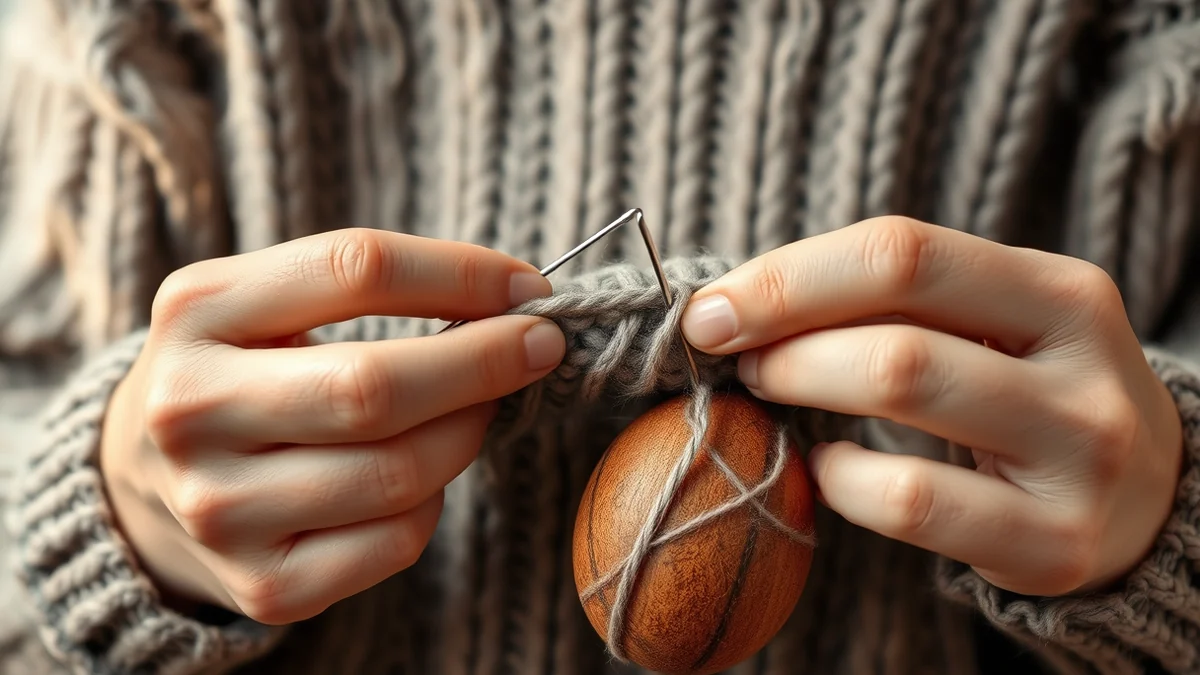
1. Stretch the area gently over a darning egg, a small ball or a lightbulb-shaped object. 2. Starting a little way outside the hole on sound fabric, sew rows of small running stitches up and down across the hole, so the threads bridge it. 3. Then weave a second set of stitches across the first, going over and under each thread, like a tiny piece of weaving. 4. Finish by weaving the ends into the back of the fabric.
Duplicate stitch (Swiss darning) is an alternative for thinning areas: you trace over the existing knit stitches with new yarn to reinforce them before they break.
Or make it a feature
Visible mending with contrasting yarn, or elbow patches over a worn area, can turn repair into a design choice. It’s a good option for casual knits where an invisible fix isn’t realistic.
When a hole needs a specialist
Home repairs work well for small moth holes in sweater knits you wear casually. They’re harder on fine-gauge knits, patterned sweaters and anything you want to look untouched.
Invisible reweaving is a specialist craft: a skilled reweaver takes yarn from a hidden part of the garment and rebuilds the missing knit or weave stitch by stitch. It’s slow, careful work, and not every hole or fabric is a candidate.
If you’d rather not attempt the repair yourself, call us and ask whether your sweater’s hole can be repaired. Our alterations and repairs team will look at the damage and tell you honestly what’s realistic, and whether a specialist is the better route.
How to store sweaters so it doesn’t happen again
Preventing moth holes in sweater wool is mostly about how sweaters go into storage.
- Clean before storing. Wash or dry clean every sweater before it goes away for the summer. Clean wool is far less attractive to larvae than soiled wool.
- Fold, don’t hang. Hanging stretches knits out of shape at the shoulders.
- Seal them. UC IPM recommends making sure stored items are clean and show no sign of pests, and keeping them in airtight containers. Sealed plastic bins or zip bags work; make sure the sweaters are completely dry first.
- Store somewhere cool and dark, not a hot garage.
- Check them mid-season. Open the boxes once or twice through the summer and shake the sweaters out.
Cedar blocks and chests smell pleasant, but UC IPM considers their effectiveness debatable; an airtight container matters more. For fine knits, our guide to washing a cashmere sweater without shrinking it covers the cleaning step, and our wool coat care guide covers coats before they go away.
The bottom line
Moth holes in sweater knits are a sign to look at the whole closet, not just one garment. Identify the cause, clean everything made of animal fibre, vacuum thoroughly and store clean sweaters in sealed containers. Small holes can then be closed or darned at home.
If you’d like your wool cleaned before it goes into storage, or want to ask whether a hole can be repaired, call us on (480) 969-9982, use the 24-hour drop-off box outside our store at 1911 E Brown Rd, Mesa, or ask about East Valley pickup and delivery on Wednesdays and Fridays, scheduled by phone. Sweaters and coats are part of our everyday dry cleaning work.
Bipin Kanabar — Owner, Bartoli Cleaners & Laundry, serving Mesa since 1957.
Frequently asked questions
How to fix holes in sweaters from moths?
Fix small moth holes by catching any loose loops first, then closing the hole from the inside with matching yarn. For pinhead-sized holes, draw the loose loops together with a few small stitches. For larger holes, darn over a darning egg: rows of running stitches across the hole, then a second set woven through them. Very visible holes may need a specialist.
What are the holes in my clothes caused by moths?
The holes are caused by clothes moth larvae feeding on the fibres, not by the adult moths, which don’t feed. The larvae eat wool and other animal fibres, and prefer fabric soiled with food, sweat or body oils. The damage usually shows as scattered small holes, often with silky webbing, cases or droppings nearby.
Why do I suddenly have clothes moths?
You usually have clothes moths because larvae have been feeding unnoticed for weeks or months, often in wool stored without cleaning. They can also arrive on secondhand clothing, vintage wool or rugs. Dark, undisturbed closets and storage boxes let them multiply quietly, so the holes seem sudden even though the moths are not.
Why are there holes in my clothes even though there are no moths?
Holes without moths are often caused by carpet beetle larvae, friction or snags. Carpet beetles eat wool and other animal fibres and leave bristly cast skins rather than webbing. Small holes at the waist of shirts usually come from belts, countertops or bag straps rubbing the fabric. Snags from jewellery or zippers and chemicals like bleach cause holes too.
Does dry cleaning kill clothes moths?
Yes, dry cleaning kills clothes moths at all life stages, including eggs and larvae, according to University of Maryland Extension. It doesn’t stop a new infestation, though. Once a sweater is clean, store it in a sealed container and deal with the closet itself by vacuuming thoroughly, or the moths can return to it.