A wool coat in the East Valley lives a strange life. It comes out for a handful of cold mornings and evenings, then spends most of the year hanging in a closet in the heat. When it does come out, it often smells of the closet, has a mark on the cuff from last winter, and needs attention before you wear it again.
This guide covers how to clean a wool coat properly: what the care label is telling you, the brushing and airing that keeps it clean, how to deal with spots, and when home washing is safe. It also covers peacoats, trench coats and storage when our short coat season ends.
We see plenty of winter coats at our Mesa counter, so we’ll be straight about which ones need a professional.
Contents
Key takeaways
- Most tailored wool coats should be dry cleaned, because the canvas, padding and lining inside shrink differently from the wool outside.
- Under the FTC care labeling rule, a maker can’t label a garment “Dry Clean Only” without proof that washing will harm it.
- Brushing after wear and letting the coat air before you hang it away removes much of the dirt and odor that would otherwise build up.
- Treat spots by blotting with cool water and a little mild wool detergent; never rub, and never use hot water.
- Clean a wool coat before you store it for the summer: clothes moth larvae feed on soiled wool.
- Store it on a broad, shaped hanger in a breathable cotton garment bag, not in dry cleaner plastic and not in a hot garage.
Start with the care label
The label is the first answer to how to clean a wool coat. Look for one of three things: a washing instruction, “Dry Clean”, or “Dry Clean Only”.
These are not the same. The FTC’s guide to the Care Labeling Rule explains that if an item can be both washed and dry cleaned, the label only needs one of those instructions. “Dry Clean Only” is different: a manufacturer can’t use it without proof that washing will harm the garment.
So a coat labelled “Dry Clean” might tolerate careful hand washing. A coat labelled “Dry Clean Only” is telling you the maker has reason to believe water will damage it. Our post on whether dry clean only clothes can be washed goes into more detail on reading that difference.
Check the lining and trims too; a silk lining, leather buttons or a fur collar complicates things.
Everyday care: brush, air and rest
Wool coats need far less cleaning than people assume. Much of the dirt that dulls a coat sits on the surface, and you can remove it before it works its way in.
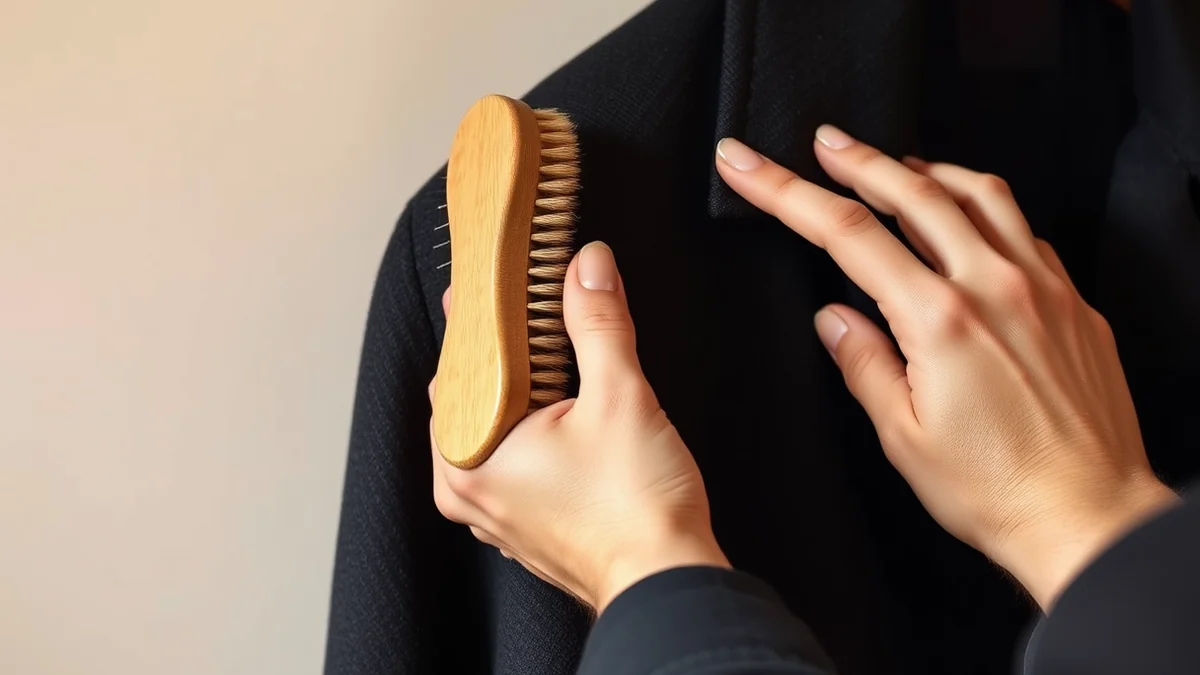
- Brush after wearing. Use a soft clothes brush and brush downward, in the direction of the nap, from the collar to the hem. Pay attention to the shoulders and collar, where dust and skin oils collect.
- Air it before hanging it away. Hang the coat somewhere open for a few hours after you wear it so moisture and odors can escape. A coat pushed straight into a crowded closet keeps whatever it picked up.
How to clean a wool coat stain at home
For a fresh spill, act quickly and gently.
1. Blot, don’t rub. Press a clean white cloth against the spot to lift as much as you can. Rubbing pushes the stain deeper and roughs up the surface of the wool. 2. Use cool water. Dampen a cloth with cool water and blot from the outside of the spot inward so it doesn’t spread. 3. Add a little wool detergent if needed. Mix a small amount of mild, wool-safe detergent into cool water, dab it on, then blot again with plain water to rinse. 4. Let it air dry. Lay the coat flat or hang it on a broad hanger away from direct heat. Don’t use a hair dryer.
Test anything on an inside seam first. Let mud dry completely and brush it off before adding water. Grease, ink, wine and makeup are harder, and a failed attempt can leave a ring worse than the original mark; bring those in.
How to freshen an old wool coat
If a coat has been in storage and smells stale, try this before cleaning it:
- Air it outside in the shade for an afternoon. Keep it out of hot direct sun, which can fade dark wool.
- Steam it. A handheld steamer held a few inches from the fabric relaxes creases and helps release odors. Let the coat dry fully before you wear it or hang it away.
- Brush it thoroughly once it is dry, including under the collar and inside the pockets.
If a musty smell survives all three, or the cuffs and collar are grimy, it needs a proper cleaning. Freshening won’t remove body oils.
Can you wash a wool coat?
Sometimes, but less often than you’d think. The problem is what’s inside. A tailored coat is built from layers: wool outer, interfacing at the chest and lapels, shoulder padding and a lining, and each reacts differently to water. The wool can shrink or felt, the interfacing can bubble, and the lining can shrink and pull the whole coat out of shape.
| Coat type | Home washing? | Main risk | Best approach |
|---|---|---|---|
| Structured wool overcoat (lined, padded shoulders) | No | Bubbling interfacing, shrinking lining, lost shape | Brush between wears; dry clean |
| Peacoat (heavy, dense wool) | Rarely | Felting, very slow drying, distorted shoulders | Spot clean; dry clean |
| Unlined, unstructured wool coat labelled washable | Yes, by hand, with care | Felting from agitation or hot water | Cool hand wash, wool detergent, dry flat |
| Wool-blend coat with a washing label | Per label | Shrinking if the wool content is high | Follow the label exactly |
| Cotton trench coat | Often, per label | Shrinking, lining damage, fading | Follow the label; many are safer dry cleaned |
If your coat does have a washing instruction, here is how to clean a wool coat at home by hand:
1. Fill a clean tub with cool water and a small amount of wool detergent. 2. Submerge the coat and gently press the water through it. No wringing, twisting or scrubbing; agitation is what felts wool. 3. Drain, then press the water out and refill with cool water to rinse. Repeat until no soap remains. 4. Roll the coat in large towels to absorb water, then lay it flat on dry towels, shaping the shoulders, collar and sleeves. 5. Turn it and replace the towels as needed until it is completely dry.
Never put a wool coat in the dryer; knowing how to clean a wool coat at home includes knowing that heat plus tumbling felts it. The same rules apply to knitwear, which our cashmere sweater washing guide covers in detail.
Peacoats and trench coats
How to clean a peacoat: a peacoat is usually made from heavy, densely woven wool, often melton. That density makes it warm and wind-resistant, and it also makes it slow to dry and prone to shrinking if washed. Brush it after wear, spot clean small marks as above, and have it dry cleaned when it needs a full clean. Check the buttons too; many are metal or horn and can be damaged by heat.
How to clean a trench coat: most trench coats are cotton gabardine or a cotton blend rather than wool. Many have a washing instruction, but check for a removable wool liner, leather-trimmed buckles and a water-repellent finish. Remove the liner and clean it according to its own label, and follow the coat’s label for the shell.
Storing a wool coat after the season
In the East Valley, the coat goes back in the closet by spring and stays there through our hottest months and monsoon season. How you put it away decides what you find next winter.
- Clean it first. University of Maryland Extension notes that soiled woolens are the primary food of clothes moth larvae, and that clean, properly stored woolens are not attractive to fabric pests. Food spots and body oils left in a coat for the summer are an invitation.
- Use a breathable bag. Woolmark’s storage guide advises cleaning garments before storing them and recommends cotton or wool bags because they let clothes breathe. Take the coat out of the dry cleaner’s plastic, which traps humidity.
- Hang it properly. Use a broad, shaped wooden or padded hanger that supports the shoulders. A thin wire hanger leaves dents and pulls the shoulders out of shape over months.
- Keep it cool and dark. A bedroom closet is better than a garage or a storage unit without climate control, where summer heat can be brutal on fabrics.
- Check on it during the summer for any sign of moth activity or damp.
Cedar blocks can help, but they don’t replace cleaning the coat first. That is the part of how to clean a wool coat that matters most for storage.
When to bring it to a professional
Learning how to clean a wool coat at home covers brushing, airing and small spots. The rest belongs with a cleaner:
- Anything labelled “Dry Clean Only”.
- Structured, lined or padded coats, including most overcoats and peacoats.
- Grease, ink, wine, makeup or a stain you have already tried to treat.
- Collar and cuff grime from a season of wear.
- A coat going into storage for the summer.
Wool coats are an everyday part of our dry cleaning service. We check the label, the lining and the trims, point out anything we’d be cautious about, and press the coat back into shape when it’s done. If a lining has torn or a button has come loose, call and ask whether your coat can be repaired while it’s in.
The bottom line
How to clean a wool coat mostly comes down to not cleaning it too often. Brush it, air it, spot clean small marks with cool water, and leave full cleaning of structured coats to a professional. Then clean it before summer storage and hang it somewhere cool.
If your coat is ready for a proper clean, call us on (480) 969-9982, use the 24-hour drop-off box outside our store at 1911 E Brown Rd, Mesa, or ask about East Valley pickup and delivery on Wednesdays and Fridays, scheduled by phone. Our contact page has hours and directions.
Bipin Kanabar — Owner, Bartoli Cleaners & Laundry, serving Mesa since 1957.
Frequently asked questions
Can I wash a wool coat that says dry clean only?
No, you shouldn’t wash a wool coat labelled “Dry Clean Only”. Under the FTC’s care labeling rule, a maker can only use that wording with proof that washing will harm the garment. The usual reasons are the interfacing, padding and lining inside, which can shrink, bubble or distort in water. Brush it and spot clean small marks at home, and have it dry cleaned when it needs more.
How to freshen up an old wool coat?
Freshen an old wool coat by airing it outdoors in the shade, steaming it lightly and brushing it thoroughly once dry. Airing lets stored odors escape, steam relaxes creases and loosens smells, and brushing lifts dust from the surface. If a musty smell or visible grime remains after that, the coat needs a proper cleaning rather than more freshening.
Can Dawn dish soap be used to clean wool?
A drop of mild dish soap diluted in cool water can help lift a small greasy spot on wool, but it isn’t a good choice for washing a whole wool garment. Woolmark recommends a neutral, mild wool detergent. Use very little, blot rather than rub, rinse the area with plain water, and test on a hidden seam first.
Should I get a wool coat dry cleaned?
Yes, for most tailored wool coats dry cleaning is the safest full clean, especially if the label says so. But it isn’t needed often: brushing, airing and spot cleaning keep a coat fresh through the season. A good rule is to have it cleaned when it’s visibly soiled, after a spill you can’t lift, and before storing it.
How do you store a wool coat for the summer?
Clean the coat first, then hang it on a broad, shaped hanger inside a breathable cotton garment bag in a cool, dark closet. Clean wool is far less attractive to clothes moths than soiled wool. Avoid dry cleaner plastic, which traps humidity, and avoid garages or sheds, which get very hot in an Arizona summer.