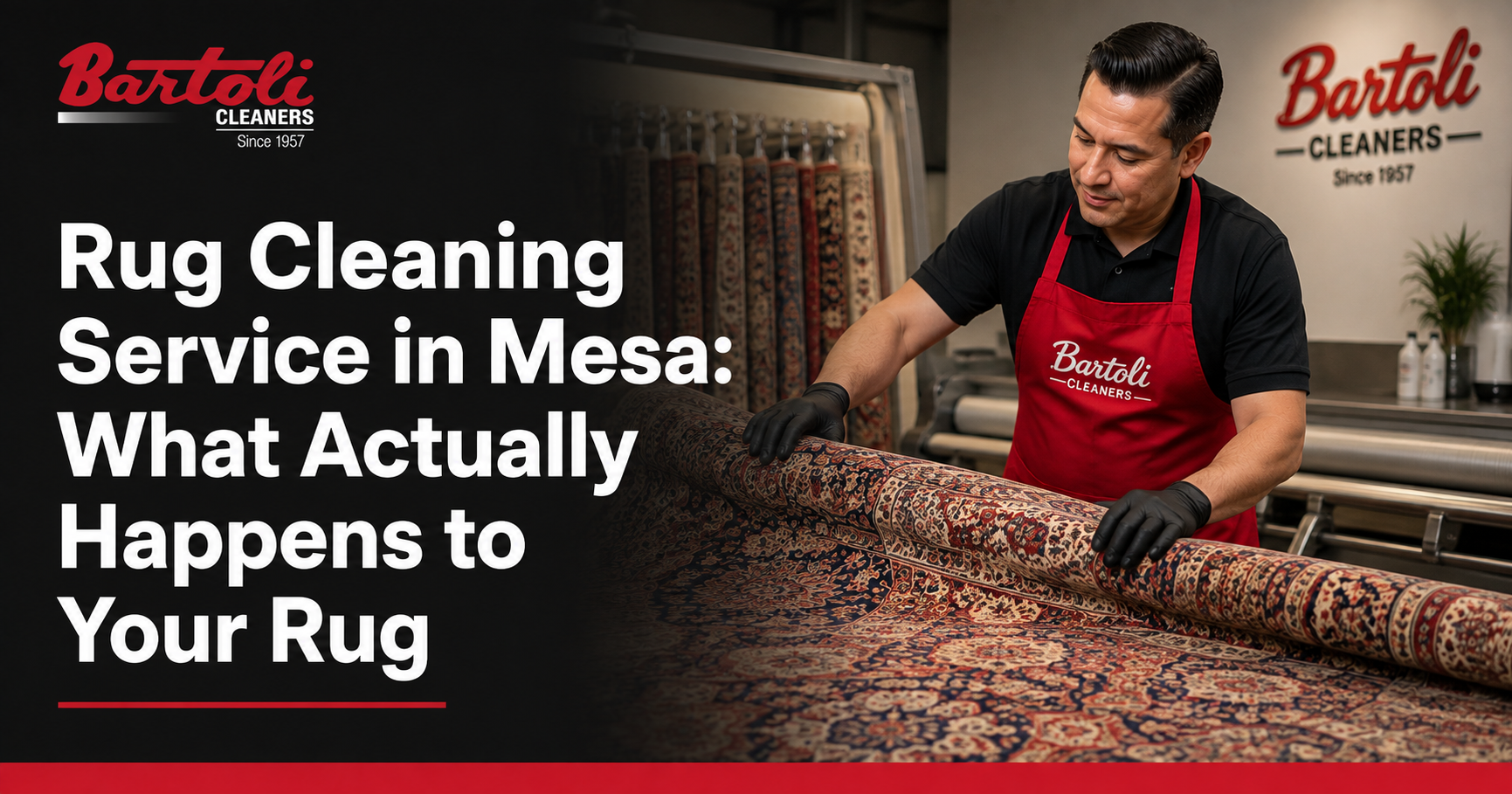
Rug Cleaning Service in Mesa: What Actually Happens to Your Rug
Most people clean a rug the same way they clean a carpet: vacuum it, and if it’s bad, rent a machine and shampoo it in place on the floor. For an area rug — especially wool, silk, or anything with a fringe — that’s the fastest way to shorten its life.
A real rug cleaning service does something different, and understanding what actually changes is the difference between a rug that lasts decades and one that starts looking tired again within a year.
Key takeaways
- Rug cleaning removes the rug from the floor and cleans it fully immersed — not sprayed and blotted in place, which is how carpet cleaning works.
- Wool and silk rugs need a different process than synthetic rugs; using the wrong one damages the fiber.
- Dry sand trapped in the base of a rug is what actually cuts the fibers over time — not surface dirt.
- Fringe needs to be cleaned and dried separately from the field of the rug, or it discolors and mats.
- A rug that’s never been fully cleaned is usually holding more soil than it looks like from the top.
Why rug cleaning is not the same job as carpet cleaning
Carpet is attached to the floor and cleaned in place — a machine agitates the surface, applies water and cleaning solution, then extracts as much of it back out as it can. That’s a reasonable approach for something you can’t remove.
A rug can be removed, and that changes everything about how it should be cleaned. On-premises rug cleaning takes the rug off the floor entirely, so both sides can be cleaned, the backing can dry properly, and the fibers get flushed rather than just surface-agitated. A rug that’s only ever been vacuumed and spot-cleaned in place is usually carrying far more embedded soil than it looks like from the top.
The part that actually damages rugs — and it isn’t stains
Most people assume the enemy is visible dirt or the occasional spill. It isn’t. The real damage comes from dry soil and sand that works its way down to the base of the pile and sits there, invisible from the top.
Every time the rug is walked on, that trapped grit acts like sandpaper against the base of each fiber. Over months and years, it’s what causes a rug to look worn and thin even in areas that were never stained. Regular vacuuming helps, but it can’t reach soil that’s already migrated to the base of a dense weave — that needs a full flush, which is what a proper cleaning service does and a home vacuum cannot.
Wool, silk, and synthetic rugs each need a different approach
This is where a lot of well-intentioned home cleaning goes wrong. Wool and silk are natural fibers that react to water, heat, and pH very differently than synthetic materials like nylon or polypropylene.
- Wool holds moisture longer than it looks like it does, and if it isn’t dried correctly it can develop an odor or, worse, mildew inside the pile where you can’t see it.
- Silk is delicate and can lose sheen or develop watermarks if the wrong process or wrong water temperature is used.
- Synthetic rugs are generally more forgiving, but a bleach-based spot treatment that would be fine on synthetic fiber can permanently discolor a wool rug.
A rug cleaning service identifies the fiber content before doing anything else, because the same treatment that’s perfectly safe on one type of rug can ruin another.
Why fringe needs its own attention
Fringe is usually the first part of a rug to look bad, and it’s often not because the fringe itself is dirty — it’s because it was cleaned and dried the same way as the rest of the rug. Fringe absorbs and holds moisture differently than a dense woven field, and if it isn’t dried properly it mats, yellows, or picks up dirt from the surrounding pile as it dries.
Fringe on an antique or hand-knotted rug deserves particular care, since it’s often original to the rug and much harder to replace or repair than the field itself.
Choosing a rug cleaning service — what to ask before you hand it over
Not every rug cleaning service works the same way, and a short phone call before you commit a rug can save real disappointment. Ask whether the cleaning happens on premises or is sent out, whether fibre content is identified before the process starts, and how the fringe is handled.
How often a rug actually needs a full cleaning
This depends heavily on foot traffic, pets, and whether the rug is in an entryway or a rarely-used room. As a general guide:
- High-traffic rugs (entryways, living rooms, homes with kids or pets): roughly once a year.
- Moderate-traffic rugs (dining rooms, hallways): every 12–18 months.
- Low-traffic or decorative rugs (formal rooms, guest bedrooms): every 2–3 years is often enough.
Vacuuming regularly between cleanings — ideally on both sides of the rug a few times a year — slows down how quickly soil migrates into the base of the pile, which stretches out the interval between full cleanings.
What to do in the minutes after a spill
Blot, don’t rub. Rubbing pushes the spill deeper into the pile and spreads it wider than it started. Use a clean white cloth or paper towel and press straight down repeatedly, working from the outside of the spill toward the center so it doesn’t spread.
Avoid using a random home remedy — club soda, vinegar, and dish soap all have a place in some situations and can set a stain permanently in others, depending on the fiber and the type of spill. If it’s a rug you care about, blot what you can and call rather than experimenting with what’s under the sink.
What Bartoli Cleaners does with rugs
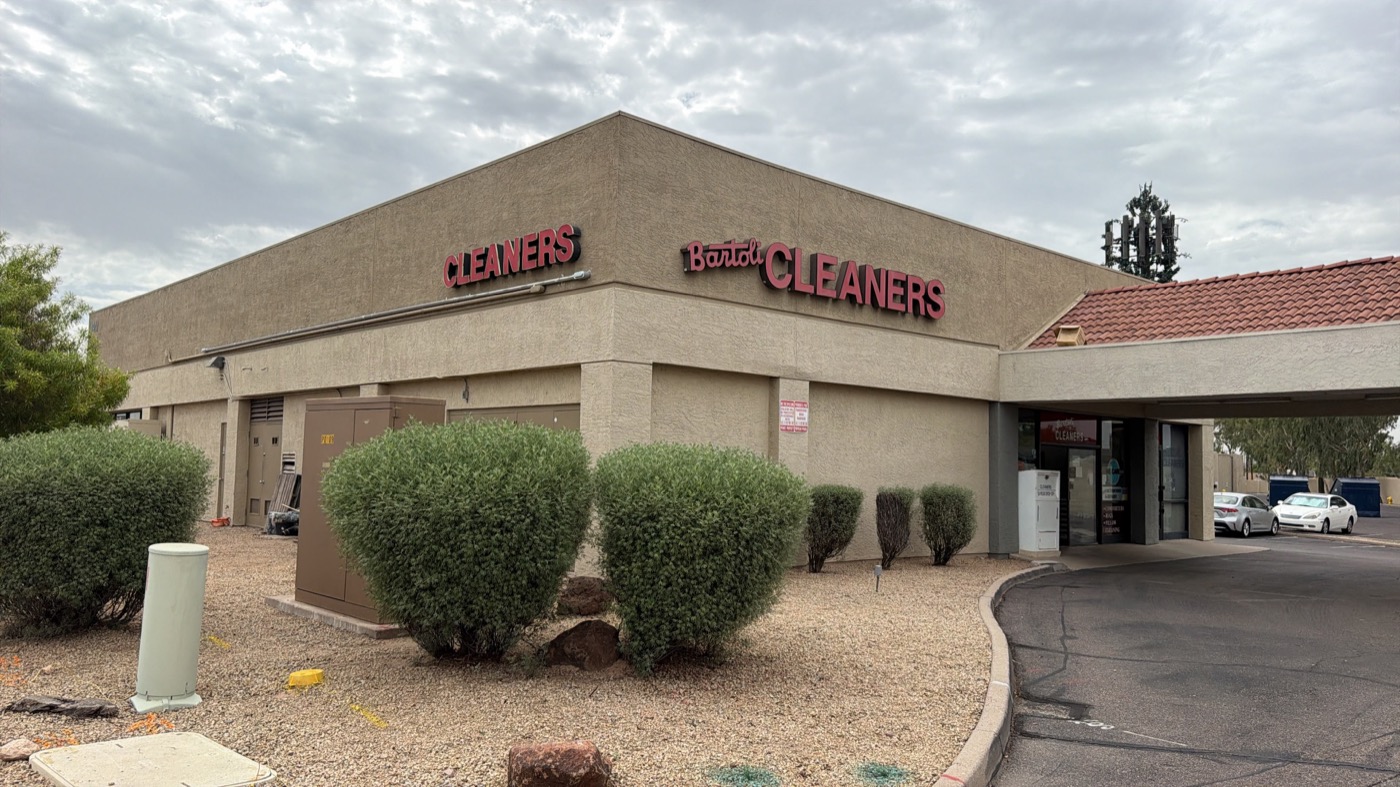
Rugs are one of the specialty items handled in-house at Bartoli Cleaners, alongside comforters and pillows — it’s on the shop signage, not an outsourced add-on. Every rug is assessed for fiber content before cleaning starts, because wool, silk, and synthetic rugs genuinely need different handling.
All the work is done on premises in Mesa. The rug that comes in is the rug that gets cleaned — it doesn’t travel to a central plant and come back through a different set of hands, which matters for anything with sentimental or genuine value.
Bartoli Cleaners also offers Specialty Services for other household items that need particular care, and if a rug needs work beyond cleaning, the team also handles Alterations & Repairs.
Rugs vary enough in size, fiber, and condition that a fair estimate for a rug cleaning service really does need eyes on the piece rather than a number pulled from a website. Call us to describe the rug — size, material if you know it, and roughly how long since it was last professionally cleaned — and you’ll get a realistic sense of turnaround and next steps before you have to bring it in.
Choosing a rug cleaning service — what’s worth asking
Not every rug cleaning service handles the work the same way, and a quick phone call before you commit a rug can save real disappointment. Ask whether the cleaning happens on premises or gets sent to a separate plant, whether fiber content is assessed before the process starts, and how fringe is handled specifically. A rug cleaning service that can answer all three clearly and specifically, rather than with a general “we clean everything the same way,” is usually the one that understands what it’s actually doing.
For antique or hand-knotted pieces, the Institute of Conservation publishes free guidance on caring for carpets and rugs, and the American Institute for Conservation lists professional textile conservators.
Frequently asked questions
How much does professional rug cleaning cost?
Pricing depends on the rug’s size, fiber content, and condition, so it’s best assessed in person or over the phone rather than quoted generically online. Call Bartoli Cleaners at the number on their site for an accurate estimate.
Can you clean an antique or hand-knotted rug?
Yes — antique and hand-knotted rugs are handled with particular care, including special attention to the fringe and to fiber-appropriate cleaning methods. Mention the rug’s age and origin when you bring it in so it can be assessed properly.
How long does rug cleaning take?
Full drying time varies by fiber and thickness — wool rugs in particular hold moisture longer than synthetic ones. Ask for a specific estimate when you drop the rug off, since it depends on the individual piece.
Do you pick up and deliver rugs?
Bartoli Cleaners offers pickup and delivery across the East Valley on Wednesdays and Fridays, scheduled by phone. For a large or heavy rug, call ahead to arrange it.
Is it safe to clean a wool rug at home with a carpet cleaner?
Home carpet cleaners are built for wall-to-wall carpet cleaned in place, and they don’t remove the trapped soil at the base of a rug’s pile the way a full immersion cleaning does. For wool and silk rugs especially, an in-place shampoo can also leave moisture trapped in the pile, which risks mildew. A rug worth keeping is generally worth a proper cleaning rather than a home carpet machine.
This article reflects general industry practice for rug care. For an assessment of your specific rug, contact Bartoli Cleaners directly.