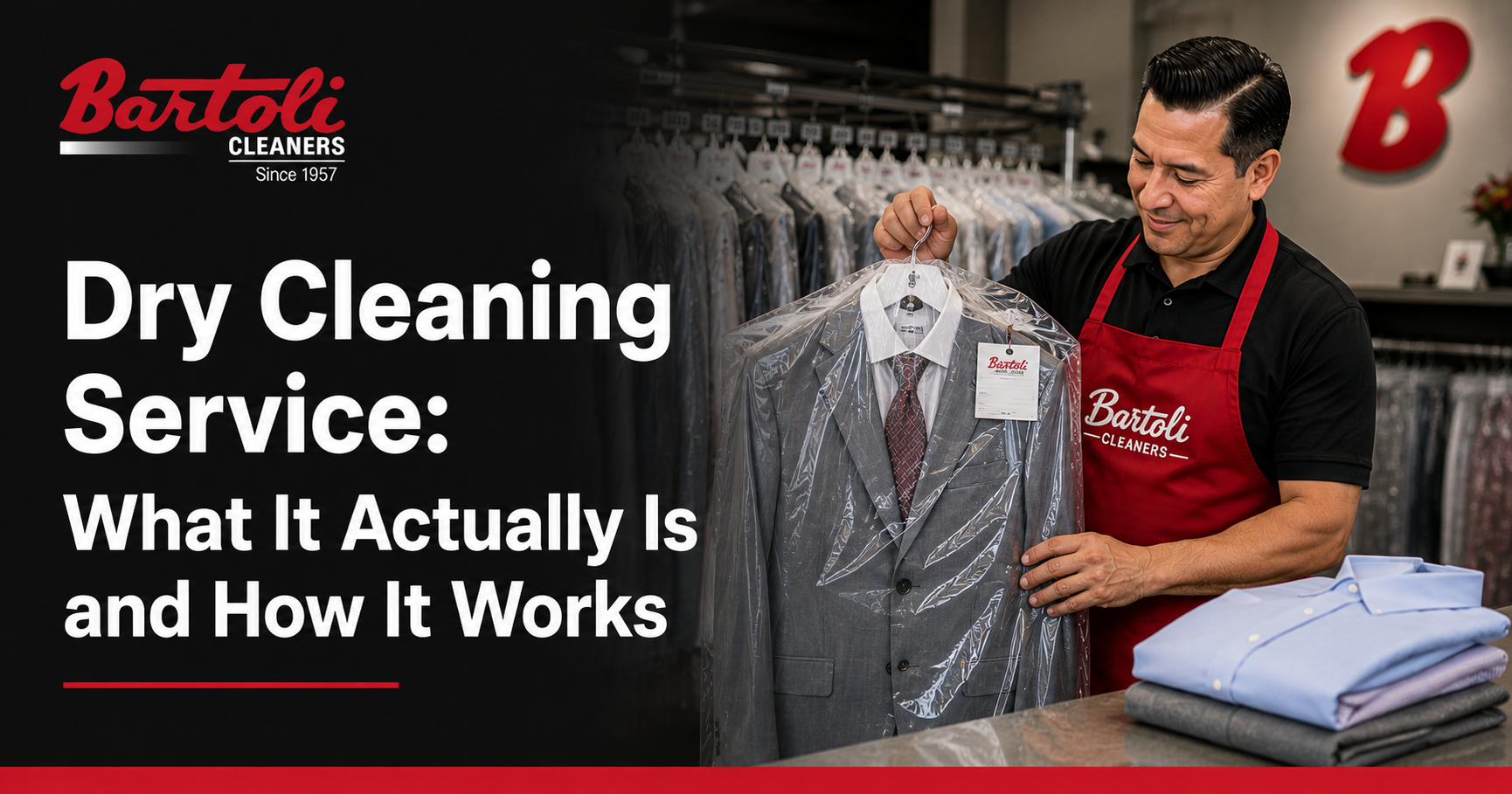
Dry Cleaning Service: What It Actually Is and How It Works
“Dry clean only” is one of the most common tags on a garment label, and one of the least understood. Dry cleaning isn’t actually dry — the name refers to the absence of water, not the absence of liquid. Understanding what the process actually does explains why some garments need it and others are just being over-cautious.
Key takeaways
- Dry cleaning uses a liquid solvent instead of water — “dry” refers to no water, not no liquid at all.
- The process exists because water and agitation damage certain fibers, dyes, and garment structures that solvent doesn’t.
- Not every “dry clean only” label is strictly necessary — some are a manufacturer being cautious, not a hard requirement.
- Dry cleaning also includes pressing and finishing, which is a large part of why the garment looks crisp afterward.
- Stains should be pointed out at drop-off, since the type of stain changes how it’s treated.
What dry cleaning actually is
Dry cleaning is a cleaning process that uses a liquid solvent instead of water to remove dirt, oils, and stains from fabric. It’s called “dry” because there’s no water involved — but it isn’t a dry process in the literal sense; the garment is fully immersed in solvent during cleaning, then dried and pressed afterward.
The reason this process exists at all is that water is genuinely damaging to certain fabrics and construction. Wool can shrink and felt. Silk can lose its sheen or bleed dye. Structured garments — suits, tailored jackets — can lose their shape entirely if the internal construction gets wet and dries unevenly. Solvent cleans effectively without the swelling and shrinking that water causes in these materials.
Why “dry clean only” appears on some labels — and why it’s sometimes overcautious
Manufacturers put “dry clean only” on a label when water would risk damaging the fabric, the dye, or the garment’s structure — but that label is also a legal safe harbor for them. If a garment can theoretically be damaged by any home washing under any circumstances, many manufacturers default to “dry clean only” rather than risk a customer washing it wrong and blaming the product.
That means some “dry clean only” garments genuinely need it, and others are being labeled cautiously by a manufacturer who’d rather not take the risk either way. A professional cleaner can generally tell the difference by looking at the fabric and construction — but as a general rule, silk, wool suiting, structured jackets, and anything with glued or fused interior construction should be treated as genuinely needing dry cleaning rather than tested at home.
What actually happens to a garment during dry cleaning
- Inspection: the garment is checked for stains, damage, and any details — buttons, trim, delicate embellishments — that need special handling before cleaning starts.
- Pre-treatment: visible stains are treated individually before the main cleaning cycle, since the solvent cycle alone doesn’t remove every type of stain.
- Cleaning: the garment is cleaned in solvent, which lifts oil-based dirt and grime without the swelling and shrinking that water causes in sensitive fibers.
- Drying: the solvent evaporates off during a controlled drying cycle.
- Pressing and finishing: this is a large part of what makes a dry-cleaned garment look noticeably crisper than one cleaned at home — proper pressing restores shape and removes wrinkles in a way a home iron rarely matches.
What to point out when you drop a garment off
Stains respond differently depending on what caused them, and a cleaner who knows what they’re dealing with can treat it more effectively than one guessing. Mention specifically:
- What caused the stain — wine, oil, makeup, grass, and ink all need different treatment approaches.
- How long it’s been there — a fresh stain and one that’s been set for weeks are handled differently, and setting expectations upfront avoids disappointment.
- Anything you’ve already tried — a home stain remover or a rubbing attempt can sometimes make a stain harder to treat, and it’s worth mentioning so it can be accounted for.
Dry cleaning vs. regular laundry — how to tell which a garment needs
As a general guide: cottons, everyday knits, and most casual clothing are fine in a regular wash. Suits, silk, structured jackets, garments with fused or glued interior construction, and anything explicitly labeled “dry clean only” should go to a dry cleaner rather than being tested at home.
When in doubt, ask. A quick question about a specific garment costs nothing, and it’s a lot cheaper than a shrunk sweater or a suit jacket that’s lost its shape.
Dry cleaning at Bartoli Cleaners
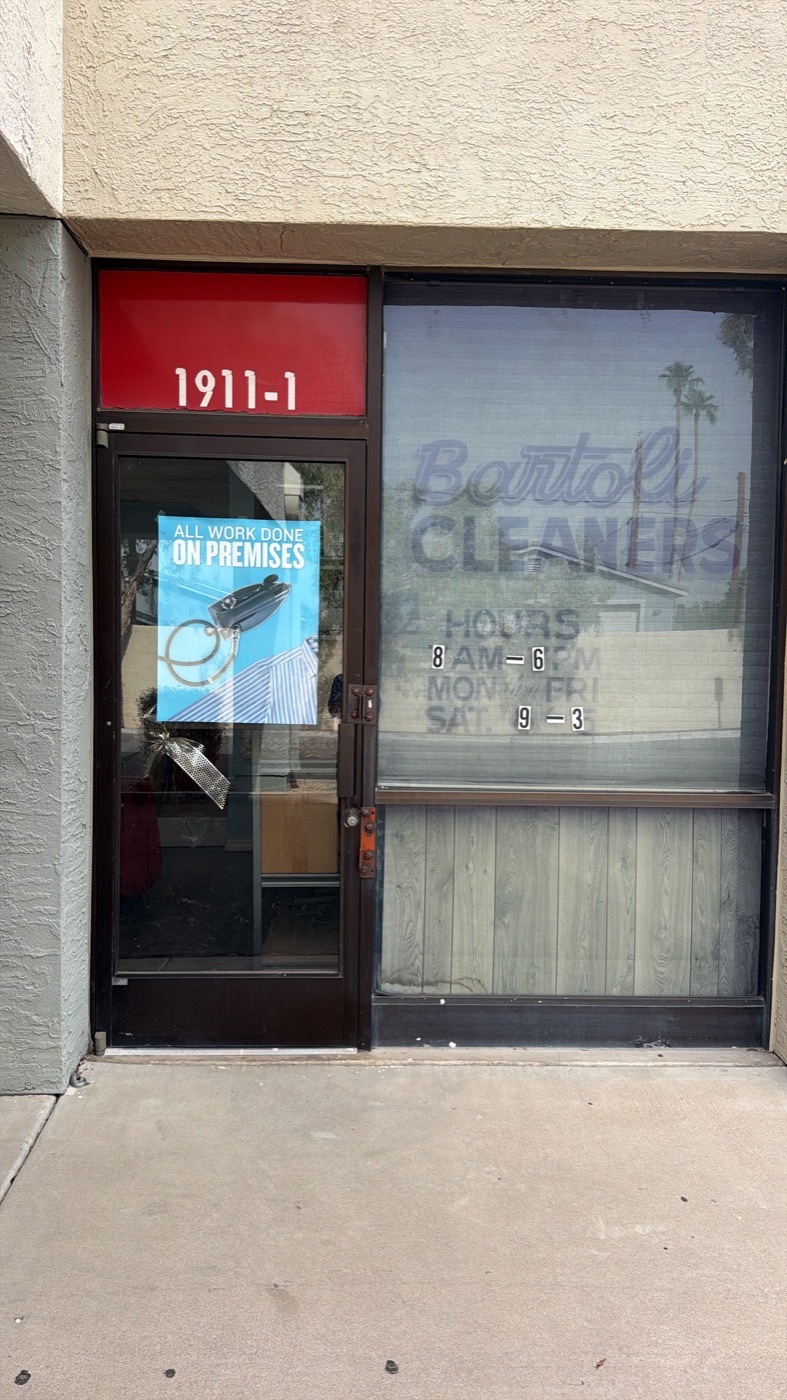
All dry cleaning at Bartoli Cleaners is done on premises at the Mesa location — the garment that comes through the door is the one that gets cleaned, pressed, and finished, without being routed to a separate plant. That matters for consistency and for accountability if anything needs attention.
Bartoli has been doing this in Mesa since 1957, and dry cleaning is the core of what the shop does — see the Dry Cleaning page for service details, or the Laundry Service page for everyday items that don’t need the solvent process. Call us if you’re unsure whether a specific garment needs dry cleaning or a regular wash — it’s a quick question and worth asking before you risk the wrong process.
What separates a good dry cleaning service from an average one
Not every dry cleaning service handles the work the same way, even though the underlying chemistry is similar across the industry. The differences that actually matter to a customer show up in a few specific places.
Where the cleaning happens is one of them. Some businesses that advertise a dry cleaning service are really a drop-off counter for a separate plant elsewhere — your garment travels, gets processed by people you’ll never speak to, and comes back through a chain with more handoffs than you’d assume from the storefront. A dry cleaning service that does the work on premises, in the same building where you drop items off, has fewer places for something to go wrong and a shorter line of accountability if it does.
How pressing and finishing is handled is another. Solvent cleaning removes the dirt; pressing is what actually restores the garment’s shape and gives it that crisp, just-cleaned look. A dry cleaning service that treats pressing as a genuine finishing step — not a rushed pass at the end of the day — produces a noticeably better result than one that doesn’t.
And how a dry cleaning service handles communication about stains, fabric concerns, or timeline matters more than people expect until they’ve dealt with a shop that doesn’t. Being told honestly that a stain might not fully lift, rather than a vague promise either way, is a sign of a business that knows the limits of the process and isn’t overselling it.
The “dry clean only” instruction on a label is a regulated statement, not a suggestion: under the Federal Trade Commission’s Care Labeling Rule and 16 CFR Part 423, manufacturers must provide a care method they have reasonable evidence is safe for the garment.
Frequently asked questions
How long does dry cleaning typically take?
Standard turnaround is usually a few days depending on volume and the garment; ask about current turnaround when you drop items off, and mention if you have a specific deadline.
Can dry cleaning remove old, set-in stains?
It depends on the stain type and how long it’s been set. Older stains are harder to fully remove than fresh ones, but a professional pre-treatment can often improve even a stain that’s been there a while. There’s no guarantee on outcome with any stain, old or new.
Is dry cleaning bad for the environment?
Solvent-based cleaning has historically raised environmental questions, and practices vary by cleaner. If this matters to you, it’s worth asking a specific cleaner directly about their process rather than assuming based on the industry generally.
Do all “dry clean only” garments really need dry cleaning?
Not always — some labels are cautious rather than strictly necessary. Fabrics like silk, wool suiting, and structured jackets genuinely benefit from it; others are labeled that way as a manufacturer safeguard. When unsure, ask a professional rather than guessing.
Do you offer pickup and delivery for dry cleaning?
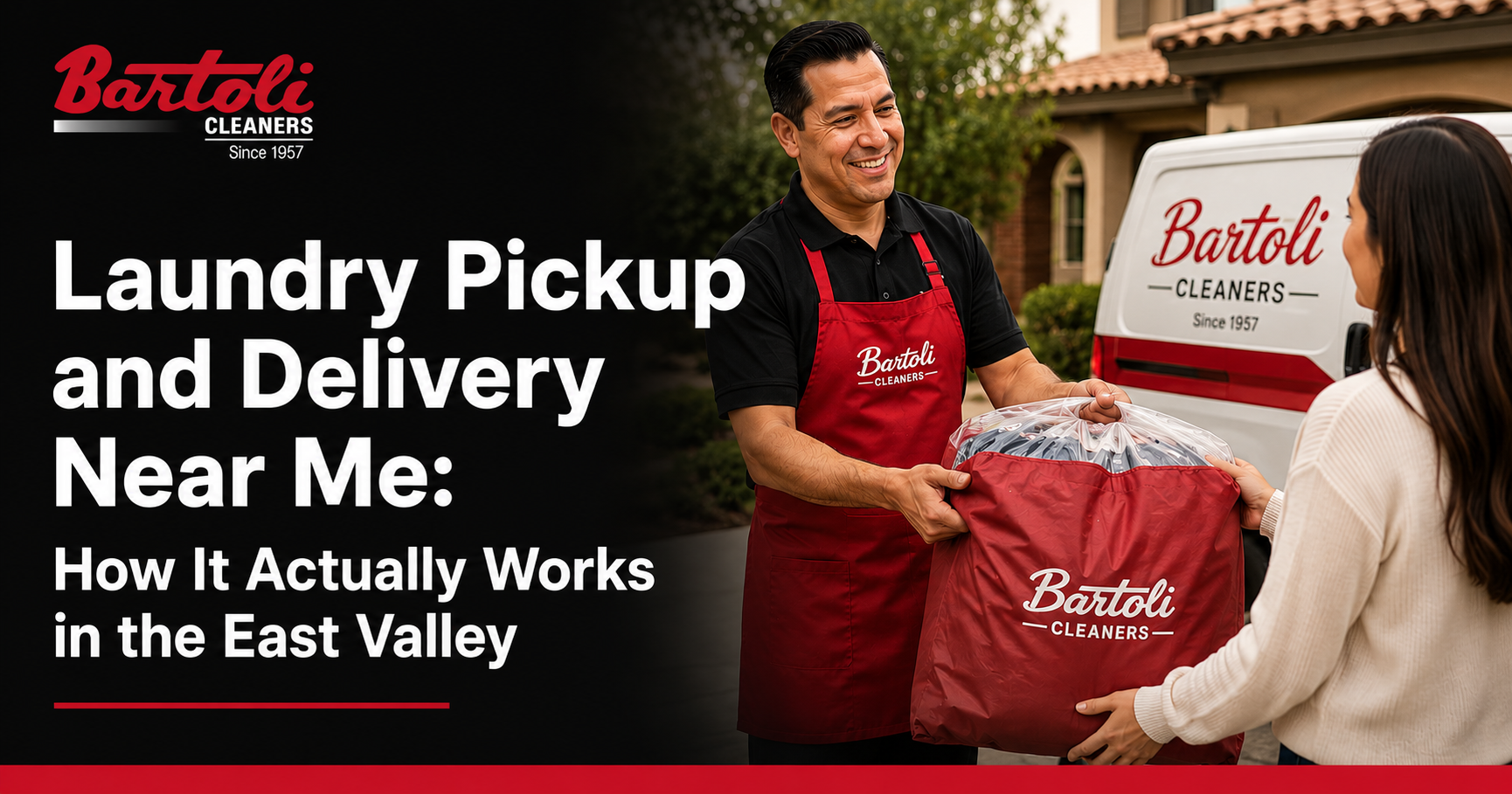
Yes — Bartoli Cleaners offers pickup and delivery across the East Valley on Wednesdays and Fridays, scheduled by phone.
This article describes general dry-cleaning industry practice. Turnaround times and specific processes should be confirmed directly with Bartoli Cleaners.