How Long Does Dry Cleaning Take? A Straight Answer From a Mesa Cleaner
Contents
The short answer is two to three days for most garments.
The longer answer is more useful, because “most garments” is doing a lot of work in that sentence, and because where your clothes physically go during those days changes the number more than anything else.
How long does dry cleaning take for standard items
For most everyday garments the honest answer to how long does dry cleaning take is two to three working days, and the reason has more to do with batching and finishing than with the cleaning itself.
For everyday items — dress shirts, trousers, blouses, a two-piece suit, a simple dress — two to three business days is the normal turnaround at a full-service cleaner.
That window is not padding. Here is what actually happens inside it.
Inspection and tagging. Every piece is examined for stains, damage, missing buttons and loose seams before anything else happens. Stains get noted and pre-treated according to what they are. This step is where a good cleaner earns their reputation, and it cannot be rushed without consequences.
Pre-treatment. Identified stains are treated individually. Oil-based marks, protein stains and tannin stains all respond to different approaches, and applying the wrong one can set a stain permanently.
Cleaning. The actual cleaning cycle is the fastest part — often under an hour.
Drying and conditioning. Garments need to return to a stable state before pressing.
Pressing and finishing. This takes longer than people expect. A properly finished suit jacket involves shaping the shoulders, the lapels, the sleeves and the body separately.
Final inspection. The piece is checked again. If a stain has not fully released, it goes back rather than out.
Add those together and two to three days is honest rather than conservative.
What makes it take longer
How long does dry cleaning take is rarely a question about the cleaning cycle itself. Inspection, stain treatment and finishing are what actually set the timeline.
Several things reliably extend the timeline, and none of them are a cleaner being slow.
Difficult stains. Some marks need more than one treatment cycle with drying in between. A cleaner who returns a garment with a faint ring rather than keeping it another day has done you a disservice.
Delicate fabrics. Silk, fine wool, cashmere, beaded or sequinned items, and anything with structured tailoring need slower handling and more careful finishing.
Household items. Comforters, rugs, curtains and pillows are bulky, absorb far more moisture, and need substantially longer drying. These are usually quoted separately for that reason.
Wedding dresses and formal wear. These are their own category. Preservation work in particular is measured in weeks, not days, because it involves specialised cleaning, inspection and archival packing.
Volume periods. The weeks around major holidays and the start of formal season are busier everywhere.
The factor most people never think about
Here is the thing that changes turnaround more than any of the above: whether the cleaner does the work themselves.
A significant number of storefronts that say “cleaners” on the sign are drop shops. They take your garments, bag them, and send them to a central processing plant — often a substantial drive away, sometimes serving dozens of storefronts. Your clothes are cleaned there and trucked back.
That adds two transport legs to every order. It also means the person who accepted your garment and the person who cleaned it never spoke, and nobody at the counter can look at a difficult stain and make a decision about it.
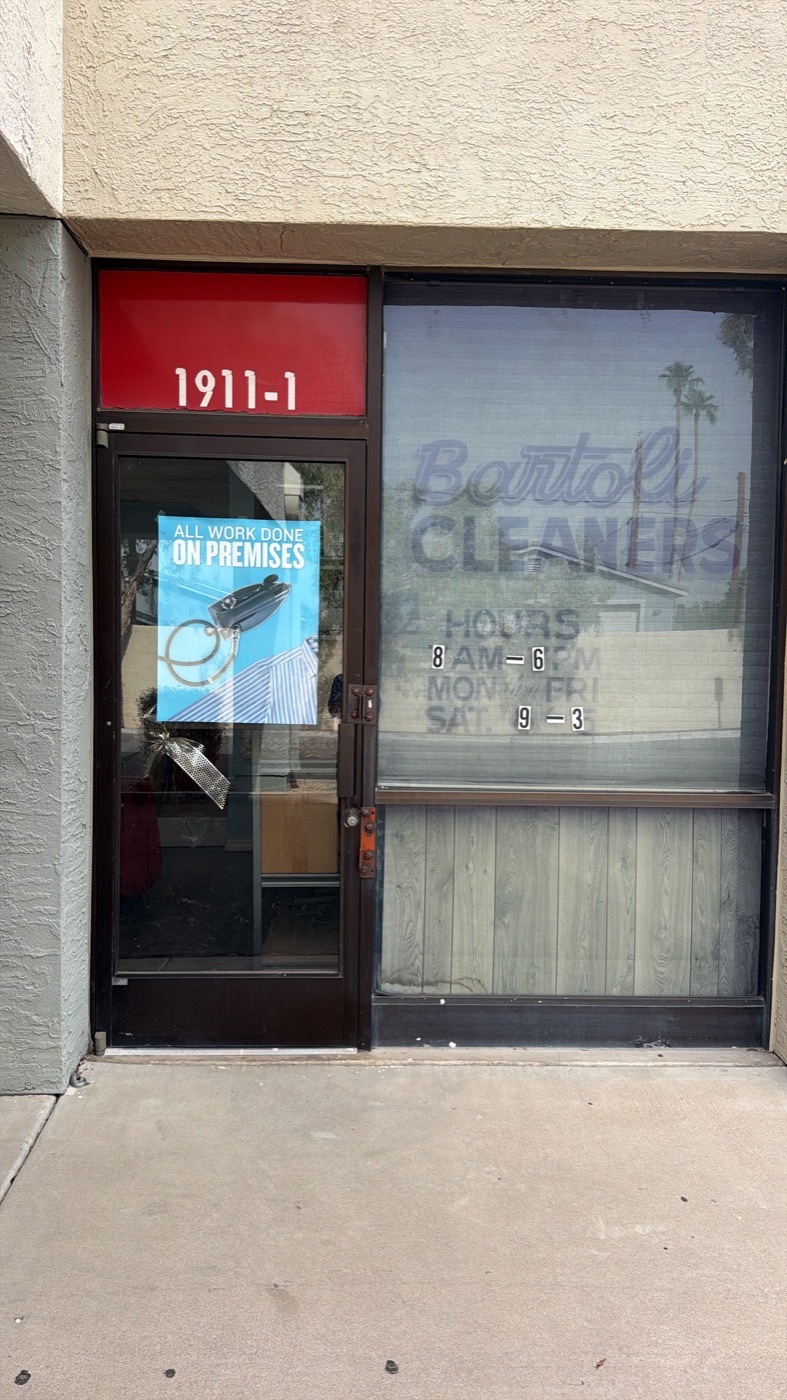
At Bartoli Cleaners, all work is done on premises. Your garments stay in the building on E Brown Rd from the moment they are tagged until you collect them. That is why our sign says so — it is the single biggest practical difference between one cleaner and another, and it is worth asking any cleaner you are considering.
It matters for three reasons. Turnaround is shorter because there is no transit. Nothing gets lost between locations. And when something needs a judgement call, the person making it is in the same building as the garment.
When same-day is realistic
Same-day service is genuinely possible, with conditions.
It generally works for standard items — shirts, trousers, simple dresses — dropped off early in the day, without complicated stains, and where nothing unexpected turns up at inspection.
It generally does not work for structured tailoring that needs full finishing, heavily soiled items, delicate fabrics, household items, or anything where a stain needs a second treatment cycle.
The honest way to handle a deadline is to say so when you drop off. Tell us when you need it and what it is for. If it can be done properly in that window, we will tell you. If it cannot, we would rather say that than hand back something rushed — which is, after all, what you would notice.
If you know you need something quickly, our dry cleaning service page covers what we handle, and calling ahead at 8am gives the best chance of a same-day turnaround.
Planning around your own deadline
Work backwards from when you need the garment rather than forwards from drop-off, and give the answer to how long does dry cleaning take a day of margin.
A few practical habits remove almost all of the stress.
Bring formal wear the week before, not the day before. Suits, formal dresses and anything structured benefit from an unhurried finish.
Do not wait on stains. A fresh stain is dramatically easier to remove than one that has aged, oxidised, or been through a home wash and a dryer. Heat sets many stains permanently. If something has happened, bring the garment in rather than attempting a home remedy first.
Group your drop-offs. If you are bringing several items and only need one urgently, say which. We can prioritise it rather than treating the batch as one job.
Use the 24-hour drop-off box. There is one outside our store, so you can leave garments outside opening hours and we will process them when we open.
Ask about pickup and delivery. We run pickup and delivery across the East Valley on Wednesdays and Fridays. It is scheduled by phone — call us and we will arrange it. Factor those days into your timing if you plan to use it.
What “ready” should mean
A garment that is genuinely ready has been cleaned, fully finished, inspected, and is free of the stain you brought it in for — or you have been told plainly that the stain will not come out.
That last part matters. Not every stain releases. Age, heat, previous home treatment and fabric type all affect what is possible. A cleaner who tells you honestly that a mark is permanent is more useful than one who returns it quietly and hopes you do not look.
If something is not right, bring it back. On-premises work means we can look at it with you and do something about it the same day.
Turnaround by item, roughly
It helps to have a mental model of where different things sit.
One to two days, often same day if dropped early: dress shirts, trousers, simple dresses, skirts, blouses, uniforms and everyday work clothing. Predictable fabrics, well-understood finishing, nothing likely to surprise us at inspection.
Two to three days: two-piece and three-piece suits, lined jackets, coats, pleated garments, and most items with a stain that needs treating. The extra time is finishing and, where relevant, the treat-dry-assess cycle.
Three to five days: silk, fine wool, cashmere, beaded or sequinned garments, heavily structured tailoring, and formal wear. Slower handling at every stage, and finishing that cannot be hurried without showing.
Five days or more: comforters, duvets, blankets, rugs, drapes and pillows. These are not slow because of the cleaning — they are slow because of drying. A comforter holds many times the moisture of a shirt and has to come out genuinely dry, not nearly dry.
Weeks: wedding dress preservation. A different service with a different process.
Two things shift these numbers in either direction.
The state it arrives in. A garment brought in the day something spilled on it moves faster than the same garment brought in a month later, because aged stains often need a second cycle. This is the single biggest variable you control.
The season. The weeks before major holidays and around formal season are busier. If you have something for a specific date in December, the second week of December is not the time to discover that.
A note on Arizona conditions
Living in Mesa creates a few garment problems that cleaners in milder climates rarely see, and they affect timing.
Perspiration is the big one. Salt and body oils build up faster here, and they do two things: they weaken fibres over time, and they oxidise into yellowing that is much harder to remove once set. Summer clothing benefits from being cleaned more often than instinct suggests — waiting until something looks dirty is usually waiting too long.
Fine dust gets everywhere. It works into weaves and acts abrasively. It also means “not visibly dirty” is a poor guide, particularly after a dust storm.
Sun exposure. Strong UV fades colour and weakens fibres. Clothing stored in a hot garage or a sunlit closet degrades measurably faster than clothing kept cool and dark.
Frequently asked questions
How long does dry cleaning take?
Two to three business days for most standard garments such as shirts, trousers and suits. Delicate fabrics, difficult stains and household items like comforters or rugs take longer, and wedding dress preservation is measured in weeks.
Can dry cleaning be done the same day?
Often, for standard items dropped off early in the day without complicated stains. It is not realistic for structured tailoring needing full finishing, delicate fabrics, household items, or stains needing a second treatment cycle. Tell us your deadline at drop-off and we will give you a straight answer.
Why do some cleaners take longer than others?
The biggest factor is whether the cleaner processes garments on site or sends them to a central plant. Drop shops add two transport legs to every order. At Bartoli, all work is done on premises on E Brown Rd.
Does a stain make dry cleaning take longer?
It can. Some stains need more than one treatment cycle with drying in between. A cleaner keeping your garment an extra day to remove a stain properly is doing the job correctly.
How long do comforters and rugs take?
Longer than clothing. They are bulky, hold far more moisture and need considerably more drying time. Ask when you drop off and we will give you a realistic date.
What if I need something by a specific date?
Say so when you drop off. If it can be done properly in that window we will confirm it; if not we will tell you rather than rush the work.
Turnaround also depends on what the care label allows. Under the Federal Trade Commission’s Care Labeling Rule, that label must state a cleaning method the manufacturer has evidence is safe, and it governs how a garment can be processed.